
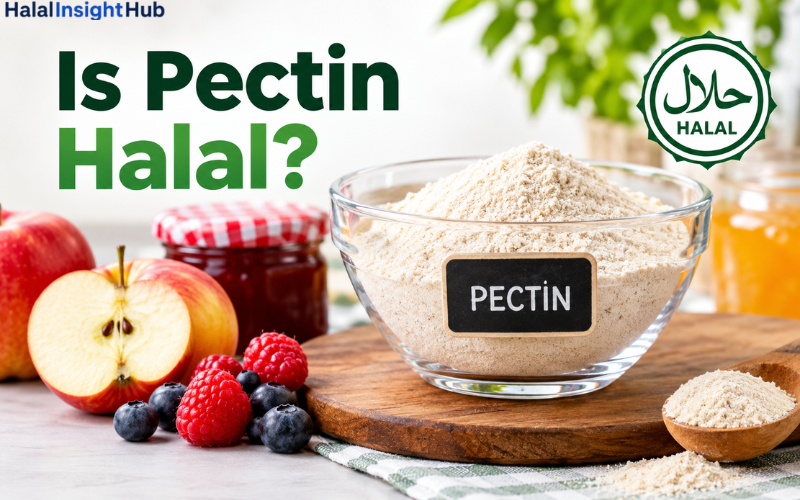
Is pectin halal or haram? Yes, pectin is generally halal because it is a plant-based ingredient extracted mainly from apple pulp and citrus fruit peels. It is commonly used as a thickener and gelling agent in jams, jellies, fruit gummies, desserts, and other foods. Unlike gelatin, which is often made from animal collagen, pectin is naturally found in plants.
However, the halal status of a finished product depends on its other ingredients and manufacturing process. Muslims should check the complete ingredient list and look for reliable halal certification when needed.
Quick Answer
Pectin (E440) is generally halal. It comes mainly from apples and citrus fruits and is widely used as a plant-based alternative to gelatin. You can find it in jams, fruit preserves, jellies, and some gummy candies.
The important distinction is that halal pectin does not automatically make every product containing it halal. Other ingredients, such as certain colorings, glazing agents, flavorings, or animal-derived additives, may require further checking.
If a product has a recognized halal certification, that provides stronger assurance about the finished food than checking pectin alone.
What Is Pectin?
Pectin is a naturally occurring carbohydrate found in the cell walls of plants. It helps give fruits their structure and is especially useful in food manufacturing because it can thicken liquids and form a gel under suitable conditions.
Commercial pectin is commonly extracted from citrus peels and apple pomace, which is the solid material left after apples are pressed for juice. Food manufacturers use it to create the desired texture in many products.
Pectin is also known by the food additive number E440. You may see it listed as pectin, fruit pectin, or E440 on an ingredient label.
Here are some common uses of pectin:
- Making jams and fruit preserves thicker
- Helping jellies maintain their shape
- Giving fruit gummies a chewy texture
- Stabilizing certain dairy desserts and yogurts
- Improving the consistency of fruit fillings and toppings
Because pectin is generally plant-derived, it is widely used in vegetarian and vegan foods. It is also a popular alternative to animal-derived gelatin.
Related Posts: Is Chipotle Halal or Haram for Muslims?
Is Pectin Halal or Haram in Islam?
Pectin is generally considered halal because its usual commercial sources are edible plants rather than animals. Standard pectin extracted from apples or citrus peels does not involve the use of pork or animal collagen.
For Muslim consumers, the key question is whether the ingredient comes from a permissible source and whether the final product contains any prohibited ingredients.
Pure, plant-derived pectin is generally suitable for halal diets. However, the status of a finished product can depend on additional ingredients, processing aids, and possible cross-contamination.
Some halal ingredient references advise checking the source and processing details in specific circumstances, especially when the manufacturer does not provide enough information. Therefore, if you are unsure about a particular product, contact the manufacturer or check for recognized halal certification.
Is E440 Halal?
Yes, E440 generally refers to pectin, a food additive commonly extracted from plant materials such as citrus peels and apple pomace.
Food manufacturers use E440 as a gelling agent, thickener, and stabilizer. It helps products achieve a smooth consistency and maintain their texture.
The designation E440 includes different forms of pectin, including standard pectin and amidated pectin. These forms have different technical properties, but the number itself does not indicate that an ingredient is haram.
| Ingredient Name | Common Source | General Halal Guidance |
| Pectin | Apples and citrus peels | Generally halal |
| E440 | Commercial pectin | Generally halal |
| E440(i) | Standard pectin | Generally halal |
| E440(ii) | Amidated pectin | Check applicable halal guidance and processing details |
For most consumers, ordinary fruit-derived pectin is not a major halal concern. If a product contains a modified form of pectin and you follow a certification authority that classifies it differently, consult that authority’s current guidance.
What Is Pectin Made From?
Pectin is mainly obtained from two plant sources: apples and citrus fruits.
Apple Pectin
Apple pectin is extracted from apple pomace, the pulp and other solid material remaining after juice production. It is used in jams, jellies, fruit fillings, and other foods that need a thicker consistency.
Because apples are permissible fruits, pectin extracted from ordinary apple material is generally halal.
Citrus Pectin
Citrus pectin is commonly produced from the peels of oranges, lemons, limes, and other citrus fruits. These peels contain substantial amounts of pectin, making them useful for commercial extraction.
Citrus-derived pectin is also generally halal when obtained and processed appropriately.
Is All Pectin Plant-Based?
Most commercial food pectin comes from plant sources, particularly apple pomace and citrus peels. This is why it is widely considered a plant-based ingredient.
However, consumers should not assume that every food containing pectin is automatically halal or vegan. A product may include other ingredients of animal origin, and its overall status must be assessed separately.
Pectin vs. Gelatin: Which Is Halal?
Pectin and gelatin are both used to create a gel-like texture in food, but they have different sources.
Pectin comes from plants, while gelatin is made from collagen obtained from animal tissues. Gelatin may come from halal-slaughtered animals, non-halal-slaughtered animals, or pigs, depending on the source.
This difference makes pectin a convenient alternative for Muslims who want to avoid uncertainty about animal-derived gelatin.
| Feature | Pectin | Gelatin |
| Main source | Apples and citrus fruits | Animal collagen |
| Plant-based | Yes, when fruit-derived | No |
| Halal status | Generally halal | Depends on animal source and applicable halal requirements |
| Vegan-friendly | Yes, when processed without animal-derived ingredients | No |
| Common uses | Jams, jellies, fruit gummies | Gummies, marshmallows, desserts |
If you see pectin listed instead of gelatin in a candy or dessert, that removes the specific concern about animal-derived gelatin. However, you should still check the remaining ingredients before deciding whether the entire product is halal.
Which Foods Commonly Contain Pectin?
Pectin is used in many everyday foods because it improves texture and helps products maintain their consistency.
1. Jam and Fruit Preserves
Pectin helps fruit spreads thicken and gives jams their familiar texture. It is often used in strawberry jam, apricot preserves, marmalade, and other fruit spreads.
Pectin itself is generally halal, but check the remaining ingredients if you have concerns about a particular product.
2. Fruit Gummies and Chewy Candies
Some gummy candies use pectin instead of gelatin. These products may be suitable for vegetarians and can be easier to assess from a halal perspective.
Nevertheless, candy may also contain colorings, flavorings, and glazing agents that require separate checks.
3. Jellies and Desserts
Pectin can help fruit jellies and other desserts hold their shape. It is often used in products designed for consumers who prefer plant-based gelling agents.
4. Yogurt and Dairy Desserts
Certain yogurts and dairy desserts contain pectin to improve thickness and prevent ingredients from separating.
The pectin is generally halal, but other ingredients in the dairy product should also be considered.
5. Fruit Fillings and Bakery Products
Pectin may be used in pie fillings, pastries, fruit toppings, and bakery preparations to maintain a consistent texture.
| Food Product | Why Pectin Is Used | What Muslims Should Check |
| Jam and marmalade | Thickening and setting | Other ingredients and flavorings |
| Fruit gummies | Creating a chewy texture | Colorings and glazing agents |
| Jelly desserts | Helping the product set | Gel-forming ingredients and additives |
| Yogurt | Stabilizing texture | Flavorings and other additives |
| Fruit pastries | Thickening fruit fillings | Filling ingredients and coatings |
Are Pectin Gummies Halal?
Pectin gummies can be halal because pectin is generally derived from fruit rather than animal collagen. These gummies are often a useful alternative for people who want to avoid conventional gelatin.
However, the word “pectin” on a candy label does not prove that every ingredient is halal.
Some sweets contain carmine, also known as E120, which is derived from insects and has differing assessments among Islamic scholars and halal authorities. Others may use shellac, listed as E904, as a glazing agent. Their acceptability should be assessed according to the guidance you follow.
You should also check the source of flavorings and any other ingredients that raise halal concerns.
For the most reliable choice, look for a recognized halal logo on the package or verify the product with its manufacturer.
How Can You Check Whether Pectin Is Halal?
Checking pectin is usually straightforward, but reviewing the entire product is important.
Read the Ingredient List
Look for terms such as pectin, fruit pectin, E440, or E440(i). These usually indicate pectin used as a food additive.
Check the Other Ingredients
Do not stop reading the label after finding pectin. Review the remaining ingredients for gelatin, questionable flavorings, colorings, glazing agents, or other ingredients that may require verification.
Look for Halal Certification
A recognized halal certification mark can provide stronger assurance that the product has been assessed according to the certifier’s standards.
Make sure the certification applies to the specific product rather than assuming that every item made by a brand is certified.
Contact the Manufacturer
If the ingredient source or manufacturing process is unclear, contact the company and ask for additional information. This is particularly useful for products with unusual ingredients or unclear certification.
Is Pectin Safe for Muslims to Eat?
From a halal perspective, ordinary plant-derived pectin is generally permissible. From a food-safety perspective, pectin is an established food additive used in a wide variety of products.
The European Food Safety Authority has evaluated pectin (E440(i)) and amidated pectin (E440(ii)) and concluded that their use as food additives did not raise a safety concern for the general population under the assessed conditions.
This scientific safety assessment is separate from the Islamic question of whether a particular product is halal. Muslims should consider the ingredient’s source and the overall product composition when making dietary choices.
Common Misunderstandings About Pectin
Pectin Is Not the Same as Gelatin
Both ingredients can help food form a gel, but they are not interchangeable in terms of source. Pectin comes from plants, while gelatin comes from animal collagen.
E440 Does Not Automatically Mean Haram
E440 is the food additive designation for pectin. Its presence on a label is not, by itself, a reason to consider a product haram.
Pectin Does Not Make Every Candy Halal
A candy can contain halal pectin but still include other ingredients that need checking. Always assess the complete ingredient list.
Plant-Based Does Not Always Mean the Entire Product Is Halal
A plant-derived ingredient may be halal while the finished product contains other ingredients that raise concerns. The whole product matters.
“I hope you learned a lot from this article. Check out more articles like this.”
- Is Kombucha Halal or Haram for Muslims?
- Is Chipotle Halal or Haram for Muslims?
- Is Alligator Halal or Haram for Muslims?
- Are Haribo Gummy Bears Halal or Haram for Muslims?
- Is Swedish Fish Halal or Haram for Muslims?
FAQs
Is pectin halal in Islam?
Yes, pectin is generally halal because it is commonly extracted from apples and citrus peels. The remaining ingredients in a food product should still be checked.
Is E440 halal or haram?
E440 refers to pectin, which is generally halal when plant-derived. Specific forms and processing details may require verification under some certification standards.
Is pectin better than gelatin for Muslims?
Pectin is often a simpler choice because it comes from plants rather than animal collagen. Gelatin can also be halal when its source and production meet applicable halal requirements.
Are pectin gummies halal?
Pectin gummies can be halal, but other ingredients, including colorings and glazing agents, may affect the overall status. Check the label or look for halal certification.
Is apple pectin halal?
Yes, apple-derived pectin is generally halal because it comes from fruit.
Is citrus pectin halal?
Yes, citrus pectin is generally halal when extracted from citrus peels and processed appropriately.
Is pectin vegan?
Pectin derived from fruit is vegan because it does not require animal ingredients. However, a finished product containing pectin may include other animal-derived ingredients.
Can Muslims eat jam containing pectin?
Generally, yes. Pectin itself is halal, but Muslims should check the jam’s other ingredients and any relevant certification.
Is amidated pectin halal?
Amidated pectin, commonly designated E440(ii), is a modified form of pectin. It remains plant-derived in ordinary commercial production, but some halal references recommend checking its processing details and the standards of the certification authority you follow.
Related Posts: Is Kombucha Halal or Haram for Muslims?
Conclusion
Pectin is generally halal because it is a plant-based ingredient commonly extracted from apples and citrus fruit peels. It is widely used in jams, jellies, fruit gummies, yogurt, and desserts as a thickener or gelling agent. Unlike gelatin, pectin does not ordinarily come from animal collagen, making it a useful alternative for Muslim consumers.
However, finding pectin on an ingredient label does not automatically make the entire product halal. Other ingredients, including certain colorings, glazing agents, and flavorings, may require additional checks.
To make an informed decision, read the complete ingredient list, check for recognized halal certification, and contact the manufacturer if you are unsure about a product.


Pingback: Is Lamb Halal or Haram for Muslims? -
Pingback: Is Kosher Halal or Haram for Muslims? -
Pingback: Is Turkey Bacon Halal or Haram for Muslims? -
Pingback: Is Sugar Alchohol Halal or Haram for Muslims? -
Pingback: Is Parmesan cheese Halal or Haram for Muslims? -
Pingback: Is Five Guys Halal or Haram for Muslims? -