
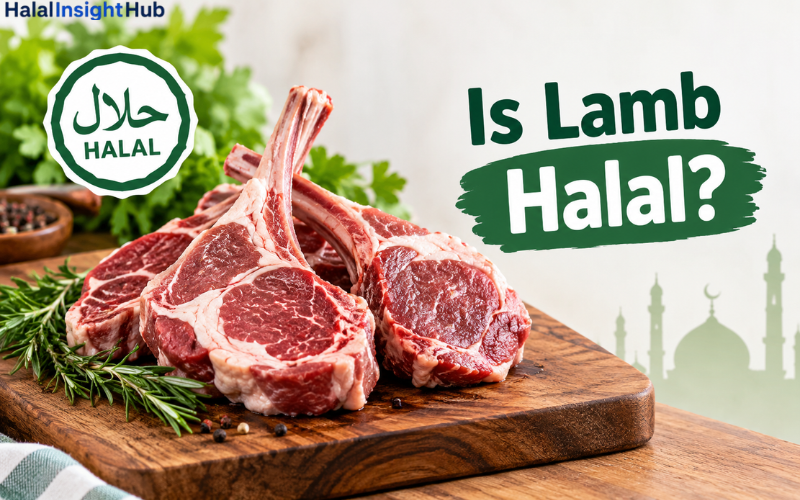
Is lamb halal or haram? Yes, lamb is halal in Islam when it is slaughtered according to Islamic dietary requirements. Lamb comes from a young sheep, and sheep are among the animals Muslims are permitted to eat. However, not every piece of lamb sold in a supermarket, restaurant, or butcher shop is automatically halal.
The most important factors are how the animal was slaughtered, whether the meat was handled appropriately, and whether it contains any prohibited ingredients or has been contaminated with non-halal substances.
For Muslims, understanding these requirements makes it easier to choose halal lamb confidently, whether buying fresh meat, ordering lamb kebabs, or enjoying a traditional lamb curry.
Quick Answer
Yes, lamb is halal — provided it meets Islamic dietary requirements. Sheep are permissible animals to eat, but the meat must come from an acceptable slaughter process and be handled in accordance with applicable halal standards. Lamb sold in Muslim-majority countries or by halal-certified butchers may be easier to verify, while meat from ordinary supermarkets or restaurants should be checked when its status is unclear.
Before buying lamb, look for a reliable halal certification, ask the butcher about its source, and confirm that the meat has been handled appropriately. The animal’s species alone does not determine whether the final meat is halal.
What Is Lamb?
Lamb is meat obtained from a young sheep. It is widely consumed around the world and is a popular ingredient in many traditional dishes.
Lamb is commonly used to prepare:
- Lamb curry
- Lamb kebabs
- Grilled lamb chops
- Lamb biryani
- Roasted lamb
- Lamb burgers
- Lamb stew
Lamb is also an important part of many Muslim culinary traditions, particularly during Eid al-Adha, when eligible Muslims may offer an animal sacrifice according to Islamic guidelines.
From an Islamic dietary perspective, sheep are permissible animals. Egypt’s Dar Al-Ifta discusses sheep and goats in its guidance on halal meat and explains that the slaughter method is an important factor in determining whether the meat is permissible.
The key distinction is between an animal that is halal to eat as a species and meat that has actually been prepared in a halal-compliant way.
Related Posts: Is Pectin Halal or Haram for Muslims?
Is Lamb Halal in Islam?
Yes, lamb is halal in Islam when the relevant dietary and slaughter requirements are fulfilled.
Islam permits Muslims to eat sheep, goats, cattle, and several other animals, subject to the rules governing their slaughter and consumption. Lamb does not become haram simply because it is red meat or because it comes from a young animal.
However, Muslims should pay attention to how the animal was slaughtered. They should also consider whether the meat has been mixed with prohibited ingredients or handled in a way that compromises its halal status.
The International Islamic Fiqh Academy has published a resolution on animal slaughter that discusses methods of slaughter under Islamic law. This provides an authoritative reference for understanding why slaughter practices matter.
For everyday shopping, the practical approach is straightforward: choose lamb from a trustworthy halal-certified supplier whenever possible, particularly when the source and slaughter method cannot otherwise be confirmed.
Is Lamb Halal or Haram?
Lamb itself is halal, but its status as a food product depends on how it is obtained and prepared.
| Lamb Product or Situation | Halal Status | Important Details |
| Lamb slaughtered according to Islamic requirements | Halal | The slaughter and handling must comply with applicable halal standards |
| Lamb from a reliable halal-certified butcher | Generally halal | Check that the certification is valid and covers the product |
| Lamb with an unknown slaughter method | Uncertain | Verify the source before eating |
| Lamb cooked with pork or prohibited animal fat | May be haram | Ingredients and preparation must be assessed |
| Lamb prepared with alcohol-based cooking ingredients | Requires verification | The ruling depends on the ingredient and relevant Islamic guidance |
| Lamb from an animal that died before proper slaughter | Generally not halal | Exceptions and detailed rulings should be assessed by a qualified scholar |
The table provides general guidance rather than a ruling on every possible situation. When a particular ingredient, slaughter practice, or contamination issue is involved, consult a trusted scholar or recognized halal authority.
What Makes Lamb Halal?
Several factors help determine whether lamb is halal for Muslim consumption.
1. The Animal Must Be Permissible to Eat
Sheep are permissible animals in Islam. Therefore, lamb is not prohibited by its species.
This is different from meat obtained from animals that are prohibited for consumption under Islamic dietary law.
2. The Slaughter Must Meet Islamic Requirements
For ordinary lamb meat, the slaughter method is central to halal status.
Islamic slaughter requirements include conditions concerning the person performing the slaughter, the invocation of Allah’s name, and the proper cutting of the relevant structures in the animal’s neck. Details can differ across Islamic legal interpretations and certification standards.
The International Islamic Fiqh Academy’s resolution on animal slaughter explains the recognized slaughter methods for livestock, including sheep.
3. The Animal Must Meet Relevant Slaughter Conditions
The animal must meet the conditions required for lawful slaughter. Questions about whether an animal was alive at the time of slaughter, whether stunning was used, and whether the procedure met the applicable standard may require verification.
Stunning is an area in which halal certification standards and scholarly opinions can differ. Muslims should check the requirements followed by the halal authority they trust.
4. The Meat Must Be Handled Properly
Even when lamb comes from a halal-slaughtered animal, storage, processing, and preparation still matter.
For example, raw lamb should not be contaminated with pork or other prohibited substances. Restaurants and food manufacturers should follow suitable separation and cleaning procedures in accordance with their halal standards.
5. Added Ingredients Must Be Permissible
Plain lamb is different from a packaged lamb product or a prepared lamb meal.
Marinades, sauces, seasonings, fats, and other additives may affect the halal status of a prepared product. Read the ingredient list and ask the manufacturer or restaurant about anything that is unclear.
Is Lamb Halal in the USA?
Lamb can be halal in the United States, but the country where the meat is sold does not automatically establish its halal status.
American supermarkets may carry lamb from different suppliers, and slaughter and certification arrangements can vary. Some products have halal certification, while others may not provide enough information to determine their status.
If you are buying lamb in the USA, consider the following steps:
- Look for a halal certification mark on the package.
- Check the certifying organization’s name.
- Ask the butcher about the supplier and slaughter method.
- Check whether the certification covers the specific lamb product.
- Verify the ingredients of marinated or processed lamb.
Do not assume that lamb is halal simply because it is sold in a supermarket or because the packaging says “natural,” “organic,” or “grass-fed.” Those labels do not establish halal slaughter.
Is Lamb Halal in the UK?
Yes, lamb can be halal in the United Kingdom when it meets the relevant Islamic dietary requirements.
The UK has both halal and non-halal meat suppliers. As a result, consumers should distinguish between lamb that is halal-certified and lamb whose slaughter method is unknown.
The UK government provides guidance on halal and kosher slaughter, including rules that apply to slaughter without stunning. However, the legal rules for slaughter do not mean every lamb product sold in the country is halal-certified.
When shopping, check the package, ask the butcher for evidence of certification, or contact the supplier directly.
If you buy lamb from a restaurant, ask whether its meat is halal-certified and whether the kitchen follows appropriate halal handling procedures.
Is Lamb Halal in Canada?
Lamb can be halal in Canada, but its status depends on the source and slaughter process.
Canadian retailers may sell halal-certified lamb alongside products without halal certification. Therefore, Muslims should verify the specific product rather than assume that all lamb is halal.
Look for a recognized halal certification, check the product label, and ask the supplier about its slaughter and handling procedures.
If you are ordering lamb at a restaurant, ask whether the restaurant uses halal-certified meat. A dish being listed as lamb curry, lamb chops, or lamb kebabs does not by itself confirm halal status.
Is Lamb Halal in Pakistan and Other Muslim-Majority Countries?
Lamb and sheep meat are widely consumed by Muslims in Pakistan and many other Muslim-majority countries. Halal meat is commonly available through local butchers, markets, and certified suppliers.
Nevertheless, the country alone is not proof that every meat product meets halal requirements.
When buying packaged lamb, imported meat, or processed lamb products, check the halal label and supplier details. In Pakistan, the Pakistan Halal Authority publishes information about halal certification bodies and recognized slaughterhouses, which can help consumers and businesses understand available verification routes.
For fresh meat purchased from a local butcher, ask about the source and slaughter arrangements if you are unsure.
Is Lamb Halal for Eid al-Adha?
Yes, sheep are among the animals that may be offered for Eid al-Adha sacrifice, subject to the relevant Islamic conditions.
However, the rules for an Eid sacrifice include requirements beyond those for simply buying lamb for an ordinary meal. These may concern the animal’s eligibility, condition, age, and the timing of the sacrifice.
A lamb purchased for everyday consumption does not automatically qualify as an acceptable sacrificial animal. Muslims planning a sacrifice should follow the guidance of a trusted scholar or recognized Islamic authority.
After a valid sacrifice, the meat may be eaten and distributed according to the applicable Islamic guidelines.
Is Lamb Halal If It Is Not Certified?
A missing halal certification mark does not, by itself, prove that meat is haram. However, it may make the meat’s status more difficult to verify.
The relevant question is whether the animal was slaughtered in a manner accepted under the Islamic guidance the consumer follows.
Egypt’s Dar Al-Ifta discusses the permissibility of meat slaughtered by Jews or Christians in its guidance on the food of the People of the Book, based on Quran 5:5. This is a subject with detailed conditions and differences in scholarly interpretation, so it should not be reduced to a blanket statement that all uncertified meat is permissible.
If you follow a particular school of Islamic law or halal certification standard, consult a qualified scholar or authority when the slaughter method is unclear.
For a straightforward shopping decision, a reliable halal-certified supplier is usually the easiest way to establish confidence.
How to Check Whether Lamb Is Halal
Use these practical steps when buying lamb or ordering it at a restaurant.
Check the Halal Label
Look for a halal mark and identify the certifying organization. If necessary, verify that the certificate is current and covers the product or supplier.
Ask the Butcher
Ask where the lamb comes from, which supplier provides it, and whether the meat has been slaughtered according to the halal standard you follow.
Read the Ingredient List
Packaged lamb burgers, sausages, ready meals, and marinated cuts may contain additional ingredients. Check for pork-derived ingredients, unsuitable animal fats, and other questionable additives.
Ask About Restaurant Preparation
Find out whether the restaurant uses halal-certified lamb and whether it keeps the meat separate from pork and other non-halal ingredients.
Contact the Certification Authority
When the label or supplier’s answer is unclear, contact the named certification body or consult its official directory if one is available.
Common Lamb Dishes and Their Halal Status
| Dish | Is It Halal? | What to Check |
| Plain grilled lamb chops | Yes, if the meat is halal | Meat source and preparation |
| Lamb curry | Usually, if halal ingredients are used | Meat, stock, sauces, and cooking ingredients |
| Lamb biryani | Depends on preparation | Meat certification, stock, and added ingredients |
| Lamb kebabs | Depends on preparation | Meat source, seasoning, and cooking surface |
| Lamb burgers | Depends on ingredients | Meat, binders, additives, and cooking equipment |
| Roasted lamb | Yes, if prepared correctly | Slaughter status, marinade, and cooking fats |
These dishes can all be prepared as halal meals. Their names alone do not establish whether the meat and every ingredient comply with Islamic dietary rules.
Is Lamb Healthier Than Other Meats?
Lamb provides protein and nutrients such as vitamin B12, zinc, and iron. Its nutritional value depends on the cut, portion size, and cooking method.
Lean cuts may contain less fat than fattier cuts, while deep-frying or adding large quantities of oil can increase a meal’s calorie content.
From a halal perspective, nutritional quality and religious permissibility are separate questions. A nutritious lamb dish must still meet halal requirements, and halal lamb can be prepared in ways that are more or less balanced nutritionally.
For a balanced diet, consider leaner cuts, moderate portions, and cooking methods such as grilling, roasting, or stewing with vegetables.
“I hope you learned a lot from this article. Check out more articles like this.”
- Is Pectin Halal or Haram for Muslims?
- Is Tuna Halal or Haram for Muslims?
- Is Crab Halal or Haram for Muslims?
- Is Tyson Chicken Halal or Haram for Muslims?
- Is Swedish Fish Halal or Haram for Muslims?
FAQs
1. Is lamb halal in Islam?
Yes, lamb is halal in Islam when it comes from a permissible animal and meets the applicable Islamic slaughter and handling requirements.
2. Is all lamb meat halal?
No. Lamb is a permissible type of meat, but not every product has a verified halal slaughter history. Check the source and certification when uncertain.
3. Is lamb halal if it is not certified?
It may be permissible depending on how it was slaughtered and the Islamic guidance you follow. Certification is a practical way to verify compliance, but its absence alone does not automatically settle every religious ruling.
4. Is lamb halal in the USA?
Yes, halal lamb is available in the USA. However, not all lamb sold there is necessarily halal-certified, so check the product or supplier.
5. Is lamb halal in the UK?
Yes, halal lamb is available in the UK. Verify the source and certification because the market includes products with different slaughter arrangements.
6. Can Muslims eat lamb from a supermarket?
Yes, if the lamb meets the applicable halal requirements. Check the label, supplier information, and certification rather than relying on the supermarket name alone.
7. Is lamb halal for Eid al-Adha?
Sheep may be used for Eid al-Adha sacrifice when they meet the applicable Islamic conditions. The rules for a valid sacrifice are more specific than those for ordinary meat consumption.
8. Is lamb halal if it is cooked with wine?
This requires careful assessment of the ingredient and preparation method. Muslims should not assume a dish is halal simply because the alcohol is heated during cooking. Ask about the recipe and follow trusted Islamic guidance.
9. Is lamb halal if it is cooked with pork?
If lamb is contaminated with pork or cooked with prohibited pork-derived ingredients, it should not be treated as a halal meal without resolving the issue according to the relevant Islamic ruling. Ask about separate preparation and cooking equipment.
10. Is lamb healthier than beef or chicken?
That depends on the cut, portion size, and cooking method. Lamb supplies important nutrients, but its fat content varies. Nutritional comparisons do not determine halal status.
Related Posts: Is Tuna Halal or Haram for Muslims?
Conclusion
Lamb is halal in Islam because sheep are permissible animals to eat. However, the meat must also meet the applicable Islamic slaughter requirements and be handled and prepared appropriately.
Whether you are buying lamb from a supermarket, visiting a butcher, ordering lamb kebabs, or preparing a traditional family meal, do not rely on the word “lamb” alone to establish halal status. Check the source, look for reliable certification, and ask about ingredients and food preparation whenever necessary.
Halal lamb is available in many countries, including the USA, UK, Canada, and Pakistan. The best way to make an informed choice is to use a trustworthy supplier and verify the details whenever they are unclear.

Pingback: Is Vanilla extract Halal or Haram for Muslims? -