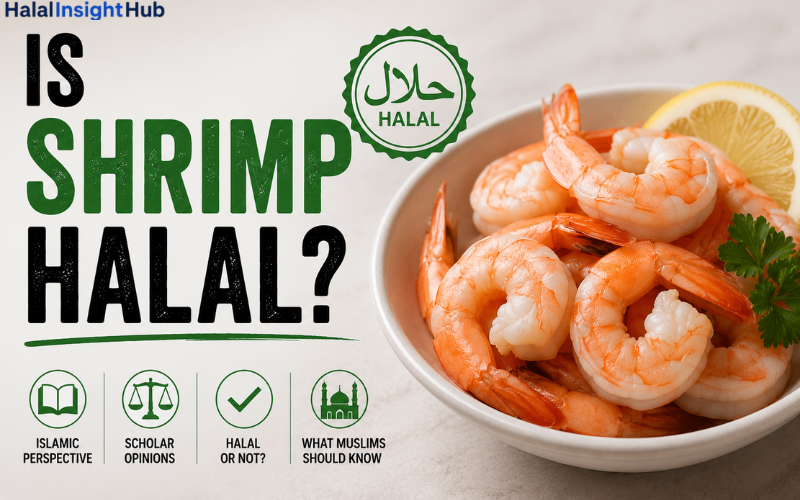
Yes, shrimp is considered halal by the majority of Islamic scholars. According to the Shafi’i, Maliki, and Hanbali schools of thought, all seafood, including shrimp, is permissible to eat. However, the Hanafi school has a different opinion. While many Hanafi scholars also consider shrimp halal, some classify it differently, leading to varying views among followers.
For Muslims who follow a specific madhhab, it is always best to follow the guidance of their trusted scholars.
Is Shrimp Halal?
If you’re looking for a simple answer, yes, shrimp is generally halal for Muslims to eat.
The majority of Islamic scholars agree that shrimp is a permissible seafood because it lives in water and falls under the category of sea creatures. However, some Hanafi scholars have debated whether shrimp should be treated as a fish or another type of aquatic animal.
For most Muslims around the world, shrimp is considered a halal food and is commonly eaten in many Islamic countries.
Related Post: Is Tyson Chicken Halal or Haram for Muslims?
Shrimp Halal Status at a Glance
| Question | Answer |
| Is shrimp halal? | ✅ Yes, according to the majority of scholars |
| Is shrimp mentioned in the Quran? | ❌ Not by name |
| Can Muslims eat shrimp? | ✅ Yes |
| Is shrimp halal for Hanafis? | ⚠️ Generally yes, but scholarly opinions vary |
| Is fried shrimp halal? | ✅ If prepared with halal ingredients |
What Is Shrimp?
Shrimp is a small shellfish that lives in both saltwater and freshwater. It is one of the most popular seafood choices worldwide and is used in dishes such as shrimp curry, grilled shrimp, shrimp pasta, and fried shrimp.
Unlike fish, shrimp belongs to the crustacean family. This difference is one reason why some Islamic scholars have discussed its halal status in greater detail.
Despite this classification, shrimp remains one of the most commonly consumed seafood items in Muslim-majority countries.
What Does the Quran Say About Seafood?
The Quran clearly permits food from the sea.
Allah says:
“Lawful to you is game from the sea and its food as provision for you and the travelers.”
(Surah Al-Ma’idah 5:96)
This verse is one of the strongest pieces of evidence used by scholars to support the permissibility of seafood.
Since shrimp is a sea creature, many scholars include it under this general permission.
What Did Prophet Muhammad (ﷺ) Say About Seafood?
The Prophet Muhammad (peace be upon him) also clarified the ruling on seafood.
He said:
“Its water is pure, and its dead animals are lawful.”
This authentic hadith is widely used by scholars to show that seafood does not require Islamic slaughter like land animals.
Because shrimp naturally lives in water, many scholars include it within this ruling.
Is Shrimp Halal According to the Hanafi School?
The Hanafi school has the most detailed discussion regarding shrimp.
Unlike the other three Sunni schools, Hanafi scholars traditionally distinguish between fish and certain other sea creatures.
Many classical Hanafi scholars accepted shrimp as halal because they considered it closer to fish than other shellfish. However, some scholars viewed shrimp as a type of shellfish rather than a true fish, leading to different opinions within the school.
Today, many Hanafi scholars permit eating shrimp, although Muslims who follow the Hanafi madhhab should follow the guidance of their local scholars.
Is Shrimp Halal According to the Shafi’i School?
Yes.
The Shafi’i school considers all sea animals halal unless there is clear evidence proving otherwise.
Because shrimp lives entirely in water, Shafi’i scholars generally agree that it is permissible to eat.
This opinion is followed by millions of Muslims across countries such as Indonesia, Malaysia, Yemen, and parts of East Africa.
Islamic Opinions on Shrimp
| School of Thought | Ruling on Shrimp |
| Hanafi | Generally halal, though some scholarly differences exist |
| Shafi’i | Halal |
| Maliki | Halal |
| Hanbali | Halal |
Is Shrimp Halal According to the Maliki School?
The Maliki school has one of the broadest views regarding seafood.
Maliki scholars generally consider all sea creatures halal unless there is clear evidence prohibiting them.
Since shrimp naturally lives in water and is widely consumed, it is regarded as halal according to the Maliki madhhab.
Is Shrimp Halal According to the Hanbali School?
Yes.
Hanbali scholars also consider shrimp halal.
Based on Quranic verses and authentic hadiths about seafood, the Hanbali school permits eating shrimp without requiring any special conditions.
As long as the shrimp itself is not contaminated with haram ingredients during preparation, it remains halal.
Why Do Some Scholars Differ About Shrimp?
The difference of opinion regarding shrimp is not about whether seafood is generally halal. Instead, it comes from how scholars classify shrimp.
Most Islamic scholars view shrimp as a sea creature covered by the general permission found in the Quran and Sunnah. However, some classical Hanafi scholars debated whether shrimp should be classified as a fish or as shellfish. Since the Hanafi school traditionally limits permissible seafood mainly to fish, this classification became an important issue.
Today, many contemporary Hanafi scholars consider shrimp permissible after examining its characteristics and common understanding. Although scholarly discussions continue, the majority opinion among Muslims worldwide remains that shrimp is halal.
The difference is based on Islamic interpretation, not on a disagreement about the importance of following halal dietary laws.
Is Fried Shrimp Halal?
Fried shrimp is halal only if all the ingredients and cooking methods are halal.
Even if the shrimp itself is permissible, the final dish can become questionable if it is prepared using non-halal ingredients or shared cooking equipment.
Before eating fried shrimp, consider the following:
- Was the batter made with halal ingredients?
- Was it fried in oil that is also used for pork or other non-halal foods?
- Does the restaurant use separate fryers?
- Are alcoholic sauces or flavorings added?
If the answers are satisfactory, fried shrimp remains halal.
Is Breaded Shrimp Halal?
Breaded shrimp can also be halal, but Muslims should check the ingredients carefully.
Some frozen or restaurant-style breaded shrimp may contain:
- Non-halal flavorings
- Alcohol-based ingredients
- Animal-derived additives
- Non-halal emulsifiers
Reading the ingredient label or asking the restaurant staff is always a wise decision.
Is Frozen Shrimp Halal?
Frozen shrimp is generally halal because freezing does not change its Islamic ruling.
However, Muslims should still review the packaging for:
- Added seasonings
- Marinades
- Artificial flavorings
- Cooking sauces
- Preservatives containing non-halal ingredients
Plain frozen shrimp without questionable additives is normally considered halal.
Can Muslims Eat Shrimp at Restaurants?
Yes, Muslims can eat shrimp at restaurants if they are confident that the food has been prepared according to halal principles.
It is recommended to ask the restaurant about:
- The ingredients used
- Cooking oil
- Cross-contamination
- Separate preparation areas
- Halal certification (if available)
Seafood restaurants that primarily serve fish and shrimp may present fewer concerns than restaurants that heavily prepare pork or non-halal meat.
Shrimp vs. Other Seafood in Islam
Many Muslims also ask about the halal status of other seafood.
| Seafood | General Halal Status | Notes |
| Shrimp | ✅ Halal | Majority scholarly opinion |
| Fish | ✅ Halal | Unanimously accepted |
| Crab | ⚠️ Scholarly differences | Varies among scholars |
| Lobster | ✅ Halal (majority view) | Accepted by most scholars |
| Oyster | ✅ Halal | Majority opinion |
| Mussels | ✅ Halal | Accepted by most scholars |
| Squid | ✅ Halal | Majority opinion |
This table shows that shrimp is among the seafood items most widely accepted as halal by Islamic scholars.
Health Benefits of Shrimp
Besides being a popular seafood choice, shrimp also provides several nutritional benefits.
It is naturally rich in protein while being relatively low in calories, making it a healthy option when prepared with halal ingredients.
Some key nutrients found in shrimp include:
- High-quality protein
- Omega-3 fatty acids
- Vitamin B12
- Selenium
- Iodine
- Phosphorus
Like any food, moderation and balanced eating are encouraged in Islam.
Nutritional Facts About Shrimp
| Nutrient | Benefit |
| Protein | Supports muscle growth and repair |
| Omega-3 | Promotes heart and brain health |
| Selenium | Supports the immune system |
| Vitamin B12 | Helps maintain healthy nerves |
| Iodine | Supports normal thyroid function |
| Low Calories | Suitable for balanced diets |
Tips for Buying Halal Shrimp
If you want to ensure your shrimp is halal and of good quality, keep these tips in mind:
- Buy plain shrimp without unnecessary additives.
- Check ingredient labels for alcohol or non-halal flavorings.
- Purchase seafood from trusted stores.
- Choose halal-certified processed shrimp whenever available.
- Ask restaurants about cooking methods and shared fryers.
These simple steps can help Muslims make informed food choices.
“I hope you learned a lot from this article. Check out more articles like this.”
- Is Jollibee Halal or Haram for Muslims?
- Is Swedish Fish Halal or Haram for Muslims?
- Is Tyson Chicken Halal or Haram for Muslims?
FAQs
Is shrimp halal in Islam?
Yes. The majority of Islamic scholars consider shrimp halal because it is a sea creature covered by the general permission for seafood in the Quran and authentic Hadith.
Is shrimp halal according to the Hanafi school?
Many Hanafi scholars consider shrimp halal, although there have been classical scholarly differences regarding its classification.
Can Muslims eat shrimp every day?
Yes, shrimp is halal for most Muslims. However, Islam encourages moderation in all aspects of eating, and a balanced diet is recommended.
Is popcorn shrimp halal?
Popcorn shrimp is halal only if the shrimp, breading, seasoning, and cooking process all comply with halal requirements.
Is shrimp tempura halal?
Shrimp tempura may be halal if it is prepared using halal ingredients and is not cooked in oil shared with non-halal foods.
Is frozen shrimp halal?
Plain frozen shrimp is generally halal. Always check the ingredient list if it is seasoned or pre-cooked.
Why do some scholars disagree about shrimp?
The difference comes from how shrimp is classified in Islamic jurisprudence, particularly within the Hanafi school. The majority of scholars still consider it halal.
Related Post: Is Swedish Fish Halal or Haram for Muslims?
Conclusion
Shrimp is generally considered halal in Islam, and this is the opinion held by the majority of Islamic scholars from the Shafi’i, Maliki, and Hanbali schools of thought. While the Hanafi school has historically discussed its classification in greater detail, many contemporary Hanafi scholars also regard shrimp as permissible.
For most Muslims, shrimp can be enjoyed with confidence as long as it is prepared using halal ingredients and without cross-contamination from non-halal foods. When dining at restaurants or purchasing processed shrimp products, it is always wise to check ingredient labels, cooking methods, and halal certification if available.