
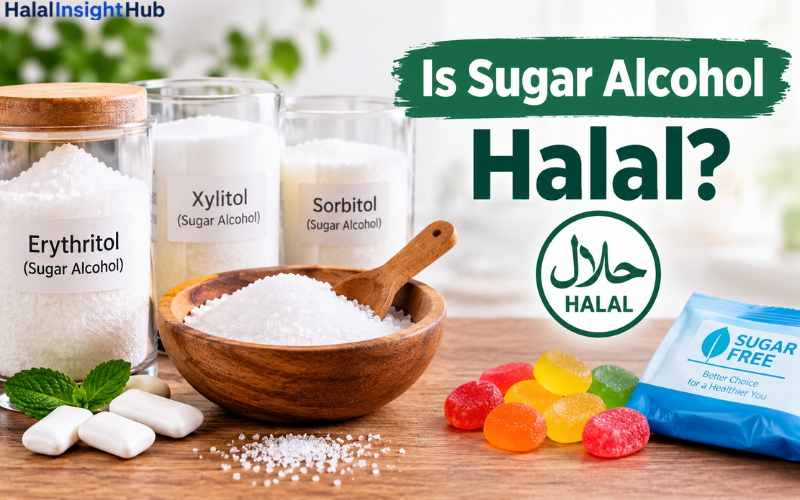
Is Sugar Alchohol halal or haram? Yes, sugar alcohols are generally considered halal because they are commonly produced from plant-based sugars and do not contain intoxicating alcohol like beer or wine. Ingredients such as erythritol, xylitol, sorbitol, and mannitol are widely used as low-calorie sweeteners in sugar-free foods and drinks.
However, the halal status of a particular sugar alcohol product may depend on its source, manufacturing process, and other ingredients. Muslims should check the ingredient label and seek reliable halal certification when the source or processing method is unclear.
Quick Answer
Sugar alcohol is generally halal, but the complete product matters. Despite its name, sugar alcohol is not the same as the alcoholic drinks prohibited in Islam. Common varieties, including erythritol, xylitol, and sorbitol, are generally considered permissible when their sources and production methods meet halal requirements.
| Sugar Alcohol | General Halal Status |
| Erythritol | Generally halal |
| Xylitol | Generally halal |
| Sorbitol | Generally halal |
| Mannitol | Generally halal |
| Maltitol | Generally halal |
| Isomalt | Generally halal |
| Lactitol | Generally halal; check its source and processing |
If you are buying sugar-free candy, chewing gum, protein bars, or other packaged foods, check the complete ingredient list. A sugar alcohol may be halal while another ingredient in the same product requires further investigation.
What Is Sugar Alcohol?
Sugar alcohol is a type of carbohydrate used as a sweetener in many foods and beverages. Despite its name, it is chemically different from the drinking alcohol found in beer, wine, and spirits.
Sugar alcohols are also known as polyols. They provide sweetness and are often used in products designed to contain less sugar or fewer calories than conventional alternatives.
Manufacturers commonly use sugar alcohols in:
- Sugar-free chewing gum
- Sugar-free candy and chocolate
- Low-sugar cookies and baked goods
- Protein bars and nutrition products
- Sugar-free desserts
- Some oral care products, including toothpaste and mouthwash
Sugar alcohols can occur naturally in small amounts in certain fruits and vegetables. Commercial products, however, usually use ingredients manufactured through controlled food-processing methods.
For Muslims, the important question is not simply whether an ingredient contains the word “alcohol.” The relevant considerations are its chemical identity, source, manufacturing process, and compliance with Islamic dietary requirements.
Related Posts: Is Kosher Halal or Haram for Muslims?
Is Sugar Alcohol the Same as Drinking Alcohol?
No, sugar alcohol is not the same as drinking alcohol.
The word “alcohol” has a specific meaning in chemistry. Sugar alcohols belong to a group of compounds called polyols, which have a different chemical structure and food use from ethanol, the intoxicating alcohol found in alcoholic beverages.
For example, erythritol and xylitol are used to sweeten foods, while ethanol is the alcohol associated with beer, wine, and spirits.
| Feature | Sugar Alcohol | Drinking Alcohol |
| Common examples | Erythritol, xylitol, sorbitol | Ethanol |
| Main food purpose | Sweetening foods | Present in alcoholic beverages |
| Intoxicating effect | Does not intoxicate like ethanol | Can cause intoxication |
| Common uses | Gum, candy, desserts | Beer, wine, spirits |
| General halal consideration | Usually permissible, subject to source and processing | Intoxicating alcoholic drinks are prohibited |
This distinction is important because ingredient names can sometimes be confusing. The word “alcohol” in sugar alcohol does not automatically make the ingredient haram.
Is Sugar Alcohol Halal in Islam?
Sugar alcohols are generally considered halal when they come from permissible sources and are manufactured using halal-compliant methods.
Islamic dietary rules distinguish between intoxicating alcoholic beverages and other substances that may have a chemical name containing the word “alcohol.” Sugar alcohols used as sweeteners are not intoxicating beverages and are not automatically prohibited because of their name.
Nevertheless, the ruling for an individual ingredient or finished product can depend on how it is produced. For example, processing aids, carriers, or other ingredients may require additional verification.
Muslims who follow a particular Islamic scholar or halal-certification authority should consult that authority when a product’s status is uncertain.
Is Erythritol Halal?
Yes, erythritol is generally considered halal.
Erythritol is a low-calorie sweetener commonly produced through fermentation of glucose using microorganisms. It is frequently found in sugar-free drinks, baking products, sweetener blends, and low-sugar desserts.
The fermentation used to manufacture erythritol does not automatically make it haram. Its halal status depends on the actual production process, materials used, and applicable halal standards.
When purchasing erythritol, check whether the product contains additional ingredients, such as flavorings or carriers, that may need separate verification.
Verdict: Pure erythritol is generally halal when manufactured using permissible ingredients and halal-compliant processes.
Is Xylitol Halal?
Yes, xylitol is generally considered halal.
Xylitol is a sugar alcohol used in chewing gum, mints, sugar-free candies, and oral care products. It can be produced from plant-derived raw materials, including materials containing xylan, a component of certain plant fibers.
Because xylitol is commonly produced from plant-based sources, its basic ingredient is generally not a halal concern. However, manufacturers may use different production methods, and the complete product may contain additional ingredients.
Muslims who want extra assurance can look for recognized halal certification, particularly when purchasing flavored gum, candy, or blended sweeteners.
Verdict: Xylitol is generally halal, provided its source and production process meet halal requirements.
Is Sorbitol Halal?
Yes, sorbitol is generally considered halal.
Sorbitol is a sweetener and humectant commonly produced by processing glucose. It helps retain moisture and is used in sugar-free candy, chewing gum, baked goods, syrups, and some personal care products.
Sorbitol itself is not intoxicating. Its common use as a food ingredient does not make it haram simply because it belongs to the sugar alcohol family.
However, consumers should still examine the other ingredients in a product and consider whether its manufacturing process complies with halal standards.
Verdict: Sorbitol is generally halal when its source and processing meet halal requirements.
Is Maltitol Halal?
Maltitol is generally considered halal when it is produced from permissible raw materials and processed according to halal requirements.
It is commonly used in sugar-free chocolate, candy, cookies, and other sweet products. Maltitol provides a sweetness similar to sugar and can help manufacturers reduce the amount of conventional sugar in a recipe.
The ingredient itself is not an intoxicating alcoholic beverage. However, the halal status of a finished chocolate or candy product also depends on its flavorings, emulsifiers, fillings, and other ingredients.
Verdict: Maltitol is generally halal, but check the complete product when other ingredients have uncertain sources.
Is Mannitol Halal?
Mannitol is generally considered halal when it is obtained and processed from permissible sources.
This sugar alcohol is used in certain sugar-free foods, pharmaceutical products, and other applications. It may also occur naturally in some plants and foods.
The word “alcohol” in its chemical classification does not mean that mannitol has the intoxicating properties of ethanol.
As with other sugar alcohols, the final ruling can depend on the manufacturing process and any additional ingredients in the product.
Verdict: Mannitol is generally halal when its ingredients and production comply with halal requirements.
Is Isomalt Halal?
Isomalt is generally considered halal when its source materials and manufacturing process are permissible.
It is commonly used in sugar-free hard candies, lozenges, and confectionery because it can provide sweetness and a texture similar to sugar.
Although isomalt is widely used in food manufacturing, the halal status of a particular product cannot be determined from this ingredient alone. Other components, such as flavorings, colors, coatings, and processing aids, may also need checking.
Verdict: Isomalt is generally halal, subject to source and manufacturing requirements.
Which Sugar Alcohols Should Muslims Check?
Most commonly used sugar alcohols are generally considered halal. However, it is useful to understand what each ingredient does and what to verify.
| Ingredient | Common Uses | What to Check |
| Erythritol | Sweetener blends, drinks, desserts | Other ingredients and processing |
| Xylitol | Gum, mints, toothpaste | Source and product additives |
| Sorbitol | Candy, baked goods, syrups | Flavorings and manufacturing aids |
| Maltitol | Sugar-free chocolate and candy | Fillings, emulsifiers, and flavorings |
| Mannitol | Sugar-free foods and some medicines | Additional ingredients |
| Isomalt | Hard candy and lozenges | Colors, coatings, and flavorings |
| Lactitol | Sugar-free confectionery | Source and production details |
These checks do not mean that the listed ingredients are inherently doubtful or haram. They simply help consumers assess the entire product rather than relying on one ingredient name.
Are Sugar-Free Products Halal?
Many sugar-free products are halal, but being sugar-free does not automatically mean that a product is halal.
Manufacturers may use sugar alcohols to replace some or all of the sugar in candy, chocolate, gum, baked goods, and beverages. These sweeteners are generally halal, but other ingredients can affect the product’s overall status.
For example, sugar-free chocolate may contain flavorings, emulsifiers, or other additives that require verification. A sugar-free candy could also contain gelatin, which may need checking for its source and halal certification.
Before purchasing a sugar-free product, consider the following:
- Check the complete ingredient list.
- Look for a recognized halal certification mark.
- Verify ingredients with unclear animal sources.
- Contact the manufacturer if the source or processing method is uncertain.
A halal-certified product offers additional assurance because its ingredients and relevant production processes have been assessed under the certifier’s standards.
How Can You Check Whether Sugar Alcohol Is Halal?
You can use these practical steps to make a more informed decision when buying products containing sugar alcohols.
1. Read the Ingredient Label
Identify the specific sweetener used, such as erythritol, xylitol, sorbitol, or maltitol. Do not confuse these ingredients with ethanol or alcoholic beverages.
2. Check the Other Ingredients
Look for additional ingredients that may require verification, including gelatin, certain flavorings, and additives derived from animal sources.
3. Look for Halal Certification
A recognized halal certification mark can help confirm that the product has been assessed according to the certifier’s standards. Make sure the certification applies to the specific product you are purchasing.
4. Contact the Manufacturer
If the source of an ingredient or its manufacturing process is unclear, ask the manufacturer for details. You can also contact the relevant halal-certification authority.
5. Consult a Trusted Islamic Authority
If you have a specific concern about fermentation, processing aids, or an unusual ingredient, consult a qualified scholar or trusted halal-certification organization.
Are Sugar Alcohols Safe to Consume?
Sugar alcohols are commonly used in foods, but their digestive effects can differ from those of ordinary sugar.
Consuming large amounts of certain sugar alcohols, including sorbitol, maltitol, and xylitol, may cause bloating, gas, or diarrhea in some people. The effect depends on the type of sweetener, the amount consumed, and individual tolerance.
Some sugar alcohols are also toxic to dogs. Xylitol, in particular, can cause a dangerous reaction in dogs, so products containing it should be kept away from pets.
From a halal perspective, safety and permissibility are separate considerations. An ingredient may be halal while still needing to be consumed in moderation.
“I hope you learned a lot from this article. Check out more articles like this.”
- Is Kosher Halal or Haram for Muslims?
- Is Turkey Bacon Halal or Haram for Muslims?
- Is Vanilla extract Halal or Haram for Muslims?
- Is Crab Halal or Haram for Muslims?
- Is Swedish Fish Halal or Haram for Muslims?
FAQs
1. Is sugar alcohol halal or haram?
Sugar alcohols are generally halal when produced from permissible sources and processed according to halal requirements. Their name alone does not make them haram.
2. Does sugar alcohol contain real alcohol?
Sugar alcohols are chemically different from ethanol, the intoxicating alcohol found in alcoholic beverages. They are used primarily as sweeteners in food products.
3. Is erythritol halal?
Yes, erythritol is generally considered halal when its production process and ingredients comply with halal requirements.
4. Is xylitol halal for Muslims?
Yes, xylitol is generally halal. It is commonly used in chewing gum, mints, and sugar-free candy, but the complete product should still be checked.
5. Is sorbitol halal?
Yes, sorbitol is generally considered halal when obtained and processed using permissible ingredients and methods.
6. Is maltitol halal in sugar-free chocolate?
Maltitol is generally halal, but the chocolate may contain other ingredients that require verification, such as flavorings, emulsifiers, or fillings.
7. Are sugar-free candies halal?
Many sugar-free candies are halal, but not all. Check the full ingredient list and look for reliable halal certification, especially if the candy contains gelatin or uncertain additives.
8. Do sugar alcohols make food haram because of fermentation?
No. Fermentation does not automatically make an ingredient haram. Its status depends on the substance produced, the materials used, the manufacturing process, and applicable Islamic dietary standards.
9. How can I know if a sugar alcohol product is halal-certified?
Look for a recognized halal certification mark on the packaging and verify it with the relevant certification organization if necessary.
10. Can Muslims eat foods containing sugar alcohol?
Yes, Muslims can generally consume foods containing halal-compliant sugar alcohols. The other ingredients and manufacturing methods should also meet halal requirements.
Related Posts: Is Kosher Halal or Haram for Muslims?
Conclusion
Sugar alcohols are generally halal because common ingredients such as erythritol, xylitol, sorbitol, maltitol, mannitol, and isomalt are used as non-intoxicating sweeteners in food products. The word “alcohol” in their name does not make them equivalent to ethanol or alcoholic beverages prohibited in Islam.
However, the halal status of a finished product depends on more than its sweetener. Other ingredients, the source of raw materials, and the manufacturing process may also matter.
Muslims can make informed choices by reading ingredient labels, checking for reliable halal certification, and contacting manufacturers when necessary. When the status of a particular product remains uncertain, seek guidance from a trusted halal-certification authority or qualified Islamic scholar.
In short, sugar alcohol is generally halal, but checking the complete product is the best way to make an informed halal decision.

Pingback: Is NAYA Halal or Haram for Muslims? -