
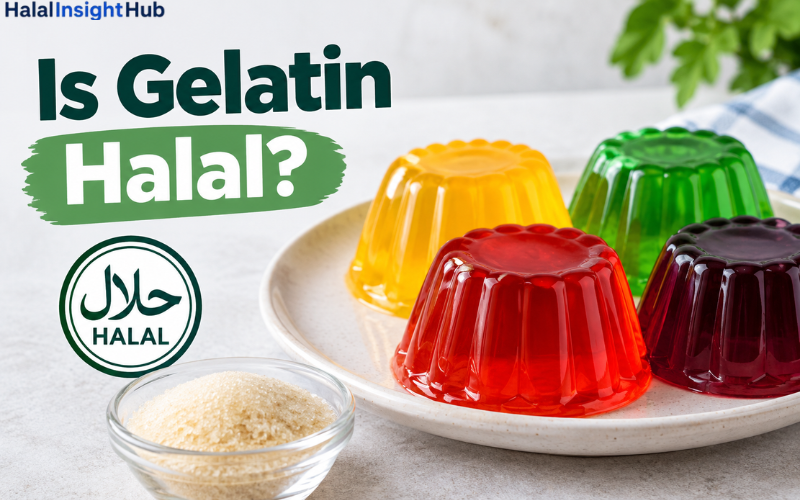
Is Gelatin halal or haram? Yes, Gelatin can be halal, but it is not always halal. Its halal status depends mainly on the animal from which it is made and how that animal was slaughtered. Gelatin made from halal-certified beef or properly slaughtered cattle can be halal, while pork gelatin is haram.
Because gelatin is found in many everyday foods, including candy, marshmallows, desserts, yogurt, capsules, and gummies, Muslims need to check the source before consuming products that contain it.
Quick Answer
Yes, gelatin can be halal, but you cannot assume that every gelatin product is halal.
Gelatin is usually made from animal collagen, most commonly from cows, pigs, or fish. Fish gelatin is generally halal, while pork gelatin is haram. Beef gelatin can be halal if the cattle were slaughtered according to Islamic requirements and the gelatin has been produced under appropriate halal standards.
If a product simply lists “gelatin” in its ingredients without identifying the source, Muslims should check the product packaging, halal certification, or contact the manufacturer before consuming it.
What Is Gelatin?
Gelatin is a protein made from collagen, a natural protein found in the skin, bones, and connective tissues of animals.
Manufacturers process these animal materials to produce a colorless or slightly yellow substance that can be used to give foods their texture and structure.
Gelatin is popular in the food industry because it has several useful properties. It can thicken liquids, create a jelly-like texture, stabilize ingredients, and help certain products maintain their shape.
You can find gelatin in many products, including:
- Gummy candies
- Marshmallows
- Jelly desserts
- Some yogurts
- Chewing gum
- Ice cream
- Puddings
- Capsules
- Vitamins and supplements
- Some processed desserts
Because gelatin is an animal-derived ingredient, its source is extremely important when determining whether it is halal.
What Is Gelatin Made From?
Gelatin can come from different animals. The most common sources are pigs, cattle, and fish.
| Gelatin Source | General Halal Status | Important Point |
| Pig | Haram | Pork and pork-derived ingredients are prohibited |
| Beef | Can be Halal | The animal must meet Islamic slaughter requirements |
| Fish | Generally Halal | Fish gelatin is generally considered halal |
Not all gelatin is the same. Two products may both list “gelatin” in their ingredients while having completely different halal statuses because the gelatin comes from different sources.
This is why checking the source is one of the most important steps for Muslim consumers.
Is Pork Gelatin Halal?
No. Pork gelatin is haram.
Pork and its derivatives are prohibited in Islam. Since pork gelatin is produced from pig skin, bones, or other pig-derived collagen, it does not become halal simply because it has been processed into gelatin.
Some food labels may identify pork gelatin using terms such as “porcine gelatin” or “pork gelatin.” If a product clearly states that its gelatin comes from pigs, Muslims should avoid it.
This is particularly important when buying imported candies, marshmallows, gummy products, and desserts because the word “gelatin” may not always make the animal source obvious.
Related Posts: Are Skittles Halal or Haram for Muslims?
Is Beef Gelatin Halal?
Beef gelatin can be halal, but the word “beef” alone does not automatically guarantee that it is halal.
For beef gelatin to be acceptable to Muslims, the source cattle must meet Islamic requirements, including proper halal slaughter. The processing and manufacturing process should also comply with relevant halal standards.
| Type of Beef Gelatin | Halal Status |
| Halal-certified beef gelatin | Halal |
| Beef gelatin from properly halal-slaughtered cattle | Generally Halal |
| Beef gelatin with unknown slaughter source | Requires Verification |
| Non-halal slaughtered cattle gelatin | Not considered halal by many scholars |
The safest choice is to look for a recognized halal certification mark on the product.
Is Fish Gelatin Halal?
Yes, fish gelatin is generally considered halal.
Fish is widely regarded as halal, and gelatin produced from permissible fish sources does not have the same concerns associated with pork gelatin.
However, consumers should still check the complete ingredient list and certification when possible. A product may contain fish gelatin but also include other ingredients that require halal verification.
Fish gelatin is also increasingly used as an alternative to pork and beef gelatin in certain food and pharmaceutical products.
Is Gelatin Halal According to Islam?
The answer depends on the source and, in some cases, the transformation and processing involved.
Islam prohibits pork and its derivatives, while animals that are permissible to eat must meet Islamic requirements. Therefore, the origin of gelatin matters when determining its halal status.
There is also scholarly discussion surrounding highly processed animal-derived ingredients and whether chemical transformation changes their original ruling. Because scholars may differ on certain forms of transformation, Muslims who follow a particular school of Islamic jurisprudence may prefer to consult a trusted scholar or halal certification authority.
For everyday food choices, checking for reliable halal certification is one of the simplest ways to avoid uncertainty.
How Can You Tell If Gelatin Is Halal?
Checking gelatin does not always have to be complicated. Start by reading the ingredient label.
If the label specifically says “porcine gelatin” or “pork gelatin,” the product should be avoided.
If it says “fish gelatin,” it is generally halal.
If it says “beef gelatin,” look for halal certification or information confirming that the beef came from a halal source.
If the label simply says “gelatin” without identifying the source, it is best to investigate further.
| Label on Product | What Muslims Should Do |
| Pork gelatin / Porcine gelatin | Avoid |
| Fish gelatin | Generally acceptable |
| Halal beef gelatin | Generally acceptable |
| Beef gelatin | Verify halal source |
| Gelatin | Check with manufacturer or halal certification body |
| Halal-certified gelatin | Preferred choice |
Is Gelatin in Candy Halal?
Gelatin is commonly used in gummy candies, jelly sweets, fruit snacks, and marshmallows.
The problem is that many candies do not clearly state whether their gelatin comes from pork, beef, or fish.
For example, a package may simply list “gelatin” among its ingredients. Without knowing its source, it is difficult to determine the halal status from the ingredient list alone.
Muslims should therefore look for:
- A recognized halal logo
- A statement identifying the gelatin source
- Manufacturer information
- A halal certification database
- Confirmation from the company
If the product contains pork gelatin, it is not halal.
Is Gelatin in Marshmallows Halal?
Marshmallows are one of the foods that Muslims should check carefully because many traditional marshmallows contain gelatin.
Some marshmallows use pork-derived gelatin, while others use halal beef gelatin or fish gelatin.
Therefore, marshmallows are not automatically halal or haram simply because they contain gelatin.
| Marshmallow Type | Halal Consideration |
| Made with pork gelatin | Haram |
| Made with halal beef gelatin | Halal |
| Made with fish gelatin | Generally Halal |
| Gelatin source not listed | Verify before eating |
| Halal-certified marshmallows | Preferred |
Always check the packaging before buying.
Is Gelatin in Capsules Halal?
Gelatin is also widely used to make pharmaceutical and supplement capsules.
Both hard and soft capsules may contain gelatin derived from animal sources. Some capsules are made using pork gelatin, while others use bovine or fish gelatin.
For Muslims who take supplements or medicines, checking the capsule material is important.
If the capsule contains porcine gelatin, Muslims may prefer a halal or vegetarian alternative when one is available and medically appropriate.
However, medicine can involve different considerations when no suitable alternative exists. In such situations, a qualified healthcare professional and trusted Islamic scholar can help assess the specific circumstances.
Is Gelatin in Vitamins Halal?
Some vitamins and dietary supplements use gelatin in their capsules.
The vitamin itself may contain halal ingredients, but the capsule could still be made from pork gelatin.
When buying vitamins, check both the active ingredients and the capsule material. Look for terms such as:
- Bovine gelatin
- Fish gelatin
- Porcine gelatin
- Gelatin capsule
- Vegetarian capsule
- Halal-certified capsule
A halal certification mark can make the process much easier because it indicates that the product has been reviewed according to the relevant halal requirements.
Are Gummy Vitamins Halal?
Gummy vitamins require extra attention because gelatin is commonly used to create their chewy texture.
Some gummy vitamins use pork gelatin, while others use halal beef gelatin, fish gelatin, pectin, or other plant-based ingredients.
If you are unsure about a gummy vitamin, check whether the manufacturer identifies the gelatin source.
Products made with pectin or other plant-based gelling agents may avoid the animal-gelatin issue, but the rest of the ingredients should still be checked.
Is Gelatin Haram?
Gelatin itself is not automatically haram.
Its ruling depends on its source and the relevant Islamic requirements.
Pork gelatin is haram because it comes from pigs. Gelatin made from halal-certified beef can be halal, while fish gelatin is generally halal.
The biggest mistake is assuming that every product containing gelatin has the same halal status.
The ingredient “gelatin” tells you what the substance is, but it does not always tell you where it came from.
Why Halal Certification Matters
Halal certification can make it easier for Muslim consumers to identify products that meet Islamic dietary requirements.
A reliable certification process can examine ingredients, animal sources, manufacturing practices, storage, processing, and other relevant factors.
This is especially useful for products containing gelatin because the ingredient may come from different animal sources.
When shopping, look for a halal certification logo from a recognized organization in your country.
However, consumers should also remember that halal certification standards and certifying organizations can vary between countries. If you have concerns about a particular certification, you can verify it with the certifying organization.
Foods That Commonly Contain Gelatin
Gelatin is used in more products than many people realize.
Common examples include:
- Gummy bears
- Gummy worms
- Marshmallows
- Jelly sweets
- Fruit snacks
- Some puddings
- Some desserts
- Certain yogurts
- Some ice creams
- Capsule supplements
- Vitamins
- Some pharmaceutical capsules
- Certain processed foods
This does not mean that these foods are automatically haram. Their halal status depends on the ingredients and manufacturing process.
What Are Halal Alternatives to Gelatin?
Muslims who want to avoid animal-derived gelatin have several alternatives.
Pectin is a plant-based ingredient commonly used to create a gel-like texture in candies and desserts. Agar-agar is another plant-based alternative derived from seaweed.
Some products may also use carrageenan or other plant-based stabilizers.
These alternatives can make it easier for manufacturers to create gelatin-free products, but consumers should still check the complete ingredient list.
| Alternative | Source | Halal Consideration |
| Pectin | Fruits and plants | Generally Halal |
| Agar-Agar | Seaweed | Generally Halal |
| Carrageenan | Seaweed | Generally Halal |
| Fish Gelatin | Fish | Generally Halal |
| Halal Beef Gelatin | Cattle | Halal when properly sourced |
What Should Muslims Do If the Gelatin Source Is Unknown?
If a product simply says “gelatin” and provides no information about its source, do not assume that it is halal.
You can:
- Check the product’s halal certification.
- Visit the manufacturer’s official website.
- Contact the manufacturer directly.
- Look for information about the gelatin source.
- Choose a certified halal alternative.
For people who follow a cautious approach to doubtful ingredients, avoiding products with an unknown gelatin source may provide greater peace of mind.
Is Gelatin Halal or Haram?
The simplest answer is that gelatin can be either halal or haram depending on its source.
Pork gelatin is haram. Fish gelatin is generally halal. Beef gelatin can be halal when the cattle and production process meet Islamic requirements.
Therefore, Muslims should not judge a product based only on the word “gelatin.” Instead, they should determine where the gelatin came from and whether the product has reliable halal certification.
“I hope you learned a lot from this article. Check out more articles like this.”
- Is Doritos Halal or Haram for Muslims?
- Are Skittles Halal or Haram for Muslims?
- Are Haribo Gummy Bears Halal or Haram for Muslims?
- Is Tyson Chicken Halal or Haram for Muslims?
- Is Swedish Fish Halal or Haram for Muslims?
FAQs
Is all gelatin haram?
No. Gelatin is not automatically haram. Fish gelatin and properly sourced halal beef gelatin can be halal, while pork gelatin is haram.
Is beef gelatin halal?
Beef gelatin can be halal if it comes from cattle that were slaughtered according to Islamic requirements and the gelatin meets applicable halal standards.
Is pork gelatin haram?
Yes. Pork gelatin is derived from pigs and is considered haram.
Is fish gelatin halal?
Fish gelatin is generally considered halal because fish is generally permissible to eat in Islam.
Is gelatin in gummy bears halal?
It depends on the type of gelatin used. Gummy bears made with pork gelatin are not halal, while those made with halal beef or fish gelatin can be halal.
Are marshmallows halal?
Some marshmallows are halal and others are not. The difference usually depends on the source of gelatin or the alternative gelling ingredient used.
Is gelatin in medicine halal?
It depends on the source of the gelatin and the specific product. If a medicine contains non-halal gelatin, Muslims may wish to ask a qualified healthcare professional and trusted Islamic scholar about suitable alternatives and the circumstances involved.
How can I know if gelatin is halal?
Look for a halal certification mark or check whether the manufacturer identifies the gelatin as halal beef or fish gelatin. If the source is unclear, contact the manufacturer before consuming the product.
Related Posts: Is Doritos Halal or Haram for Muslims?
Conclusion
So, is gelatin halal? The answer is: sometimes.
Gelatin can be halal when it comes from a permissible source, such as fish or properly halal-certified beef. However, gelatin made from pork is haram and should be avoided by Muslims.
Because gelatin is found in many everyday foods, supplements, candies, marshmallows, and capsules, checking the source is an important part of making halal food choices.
When the packaging clearly identifies halal-certified beef or fish gelatin, the decision is much easier. If the label only says “gelatin” without giving its source, it is better to verify the information with the manufacturer or look for reliable halal certification.
For Muslims who want to avoid uncertainty, choosing products with clear halal certification or plant-based alternatives such as pectin and agar-agar can be a practical option.
Ultimately, the key is simple: do not assume all gelatin is halal or all gelatin is haram. Check its source, certification, and ingredients before making your choice.

Pingback: Is Alligator Halal or Haram for Muslims? -
Pingback: Is Chipotle Halal or Haram for Muslims? -