
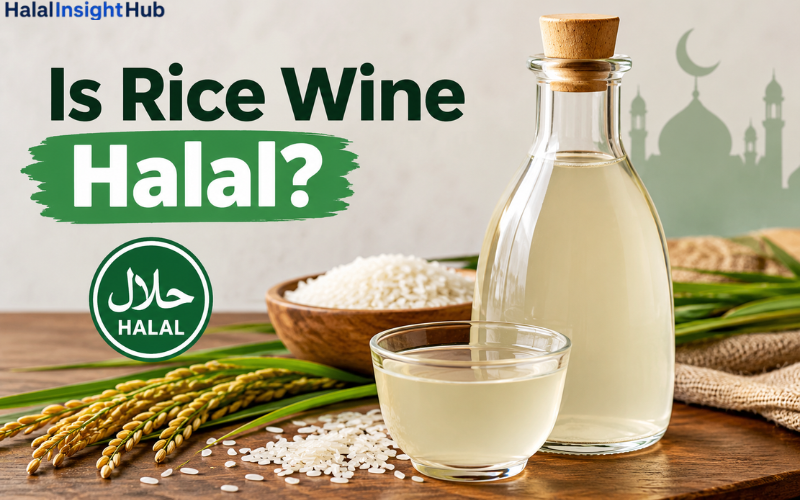
Is rice wine halal or haram? No, rice wine is haram in Islam because it is an alcoholic beverage made by fermenting rice and is intended to contain intoxicating alcohol. Islam prohibits intoxicating drinks regardless of whether they are made from grapes, grains, fruits, rice, or other ingredients.
The fact that rice wine is made from rice does not make it halal. What matters is whether the fermentation process produces intoxicating alcohol and whether the final product is an alcoholic drink.
However, rice-based products such as rice vinegar are different from rice wine and should not automatically be considered haram. The ingredients, production process, and final product all matter.
Quick Answer
Rice wine is haram for Muslims to drink.
Rice wine is produced by fermenting rice, and the resulting beverage contains alcohol that can intoxicate. Since Islam prohibits khamr and intoxicating substances, Muslims should avoid drinking rice wine.
It is also important to distinguish rice wine from other rice-based ingredients. Rice vinegar, rice seasoning, and non-alcoholic rice products may have different rulings, depending on how they are produced and what ingredients they contain.
Rice Wine Halal Status at a Glance
| Question | Answer |
| Is rice wine halal? | ❌ No, it is generally haram |
| Is alcoholic rice wine halal? | ❌ Haram |
| Can Muslims drink rice wine? | ❌ No |
| Is rice vinegar the same as rice wine? | ❌ No |
| Is cooking with rice wine halal? | ⚠️ Generally avoid products containing alcoholic rice wine |
| Is non-alcoholic rice seasoning automatically halal? | Not necessarily; check the ingredients |
What Is Rice Wine?
Rice wine is an alcoholic beverage produced through the fermentation of rice. Unlike ordinary table wine, which is usually made from grapes, rice wine is produced using rice and microorganisms that convert carbohydrates into alcohol.
Rice wine is traditionally associated with several Asian cuisines. Different varieties are used as beverages, cooking ingredients, marinades, sauces, and flavoring agents.
Examples include Japanese sake, Chinese rice wine, and other fermented rice-based alcoholic beverages.
Although the names and production methods can differ, the important Islamic question is whether the product is an intoxicating alcoholic drink.
If it contains intoxicating alcohol and is intended to be consumed as an alcoholic beverage, Muslims should not drink it.
Why Is Rice Wine Haram in Islam?
The primary reason rice wine is haram is the presence of intoxicating alcohol.
Islam does not prohibit alcohol simply because of the ingredient from which it is produced. The prohibition applies to intoxicating drinks regardless of their source.
Allah says in the Quran:
“O you who have believed, indeed, intoxicants, gambling, idols, and divining arrows are but defilement from the work of Satan, so avoid it that you may be successful.”
Quran 5:90
This verse establishes the clear prohibition of intoxicants.
Therefore, changing the source from grapes to rice does not change the basic ruling. If rice is fermented to produce an intoxicating alcoholic beverage, the resulting rice wine falls under the prohibition of intoxicants.
Does the Quran Mention Rice Wine?
No, the Quran does not specifically mention the term “rice wine.”
The Quran was revealed centuries before modern food terminology and international names for different alcoholic beverages became common. Instead, Islamic rulings concerning alcohol are based on the broader prohibition of khamr and intoxicants.
This means Muslims do not need to find the exact word “rice wine” in the Quran to determine its ruling.
The important question is whether the substance falls under the category of an intoxicating alcoholic drink.
Related Post: Is Dr Pepper Halal or Haram for Muslims?
What Does Islam Say About Alcohol?
Islam clearly prohibits intoxicating drinks.
The prohibition developed through several Quranic revelations, eventually establishing that intoxicants are something Muslims should avoid.
The Quran states:
“Intoxicants and gambling are Satan’s handiwork, so shun them so that you may be successful.”
Quran 5:90
The Prophet Muhammad ﷺ also warned Muslims about intoxicants and their effects.
Because rice wine is an alcoholic beverage designed to contain alcohol, it falls under this general prohibition.
Rice Wine vs. Other Rice Products
One important point is that not every product made from rice is haram.
Rice itself is completely halal. Rice flour, cooked rice, rice noodles, rice milk, and many other rice-based foods are generally halal.
The problem with rice wine is the fermentation process that produces alcohol.
This distinction is important because people sometimes see “rice” on a product label and assume the product must be halal.
That is not how halal classification works.
The source ingredient can be halal while the final product can become haram because of processing or added ingredients.
Common Rice-Based Products and Their Status
| Rice-Based Product | General Status | Why? |
| Plain rice | ✅ Halal | Naturally permissible |
| Rice flour | ✅ Halal | No intoxicating alcohol |
| Rice noodles | ✅ Usually halal | Check added ingredients |
| Rice vinegar | ✅ Generally halal | Different from rice wine |
| Rice wine | ❌ Haram | Alcoholic and intoxicating |
| Sake | ❌ Haram | Alcoholic rice-based beverage |
| Mirin | ❌/⚠️ Check product | Traditional mirin contains alcohol |
| Non-alcoholic rice seasoning | ⚠️ Check label | Ingredients and production vary |
Is Sake Halal?
No, traditional sake is not halal.
Sake is a Japanese alcoholic beverage made by fermenting rice. Because it contains alcohol and is consumed as an alcoholic drink, Muslims should not drink it.
The fact that sake is made from rice does not make it permissible.
If a restaurant uses sake as an ingredient, Muslims should ask whether the dish contains actual sake or whether a halal substitute has been used.
Is Chinese Rice Wine Halal?
Traditional Chinese rice wine is generally haram because it is an alcoholic beverage.
Chinese rice wine is used both for drinking and cooking. Some varieties can contain significant amounts of alcohol.
Muslims should therefore be careful when ordering Chinese dishes that list rice wine as an ingredient.
If the menu specifically says “rice wine,” “Chinese cooking wine,” or another alcoholic rice-based wine, it is better to ask the restaurant whether a halal alternative is available.
Is Cooking With Rice Wine Halal?
Cooking with alcoholic rice wine is a common concern among Muslims.
Some people assume that alcohol automatically disappears during cooking. However, this does not make it appropriate to intentionally add an alcoholic beverage to food.
For a Muslim following halal dietary rules, the safest approach is to avoid dishes prepared with alcoholic rice wine.
Instead, restaurants can use halal alternatives such as:
- Rice vinegar
- Non-alcoholic cooking wine
- Halal-certified seasoning
- Broth or stock
- Ginger and garlic
- Soy sauce, provided its ingredients are halal
The exact alternative depends on the recipe.
Does Cooking Remove All the Alcohol?
Cooking can reduce alcohol, but it does not necessarily mean that all alcohol disappears immediately.
The amount remaining depends on factors such as:
- Cooking temperature
- Cooking time
- Amount of alcohol added
- Cooking method
- Whether the food is covered
- Other ingredients in the dish
For Muslims, the issue is not simply whether laboratory testing might find less alcohol after cooking. The original ingredient itself is an alcoholic beverage.
Therefore, intentionally using rice wine as a cooking ingredient should generally be avoided when preparing halal food.
Is Rice Vinegar the Same as Rice Wine?
No. Rice vinegar and rice wine are different products.
This distinction is particularly important when eating Asian food.
Rice wine is produced as an alcoholic beverage through fermentation and contains alcohol.
Rice vinegar undergoes further processing that produces acetic acid, giving it the characteristic sour taste of vinegar.
Therefore, Muslims should not automatically treat rice vinegar and rice wine as the same thing.
However, flavored or specialty rice vinegar can contain additional ingredients, so checking the label remains a good practice.
Can Muslims Eat Food Made With Rice Wine?
If a food is prepared using alcoholic rice wine, Muslims should avoid it.
This includes dishes where rice wine is used as:
- A marinade
- A sauce ingredient
- A cooking liquid
- A seasoning
- A glaze
- A flavor enhancer
If the restaurant confirms that the dish contains real alcoholic rice wine, it is better to choose another option.
When eating at an Asian restaurant, you can simply ask:
“Does this dish contain sake, mirin, or rice wine?”
If it does, ask whether the chef can prepare the dish without it.
How to Identify Rice Wine on Food Labels
Rice wine may appear under different names on product packaging.
Look for terms such as:
- Rice wine
- Chinese rice wine
- Shaoxing wine
- Sake
- Japanese rice wine
- Cooking sake
- Mirin
- Alcoholic rice seasoning
Not every product with a similar name has exactly the same ingredients, so the label should be checked carefully.
Rice Wine Ingredients to Watch For
| Label Term | What It Usually Indicates | Muslim Guidance |
| Rice wine | Alcoholic fermented rice drink | ❌ Avoid |
| Sake | Japanese alcoholic rice beverage | ❌ Avoid |
| Shaoxing wine | Chinese cooking wine | ❌ Avoid if alcoholic |
| Cooking sake | Alcoholic cooking ingredient | ❌ Avoid |
| Mirin | Traditional Japanese alcoholic seasoning | ❌ Avoid traditional versions |
| Rice vinegar | Vinegar made from rice | ✅ Generally permissible |
| Non-alcoholic seasoning | Alcohol-free alternative | ⚠️ Check ingredients |
Is Rice Wine Haram Even in Small Amounts?
Muslims should not drink rice wine even in small amounts.
The prohibition is not limited to becoming visibly drunk. The underlying issue is that the product is an intoxicating alcoholic beverage.
The Prophet Muhammad ﷺ taught an important principle concerning intoxicants:
“Whatever intoxicates in large quantities, a small quantity of it is also forbidden.”
This principle is frequently cited by Islamic scholars when discussing alcoholic beverages.
Therefore, a person should not consider rice wine permissible simply because they intend to consume only a small amount.
What About Rice Wine Used in Food?
This situation is different from accidentally consuming a tiny trace of alcohol that may naturally occur in certain foods.
When rice wine is deliberately added to a recipe, the alcoholic product is being used as an ingredient.
For Muslims who want to maintain a clearly halal diet, avoiding food intentionally prepared with rice wine is the safest choice.
If you are unsure about a particular packaged product or restaurant dish, consult a trusted halal certification authority or qualified Islamic scholar.
Halal Alternatives to Rice Wine
Fortunately, Muslims do not need rice wine to enjoy Asian cuisine.
Many halal alternatives can provide similar flavors without using alcoholic ingredients.
Some options include:
- Rice vinegar
- Apple cider vinegar
- Non-alcoholic cooking wine
- Halal-certified mirin substitutes
- Chicken or vegetable stock
- Soy sauce
- Ginger
- Garlic
- Sesame oil
- Sugar or honey for sweetness
The best substitute depends on the recipe and the flavor the cook wants to achieve.
Can Muslims Eat Sushi With Rice Wine?
It depends on the ingredients used to prepare the sushi.
Plain sushi rice does not automatically contain alcohol. However, some restaurants may use rice vinegar, seasoning, or other ingredients.
Rice vinegar itself is not the same as rice wine.
The bigger concern is whether the sushi contains alcoholic ingredients such as sake or mirin, or whether sauces and marinades contain alcohol.
Muslims should also check the seafood and sauces being used.
For example, plain fish, shrimp, or vegetables may be halal, while a sauce containing sake or mirin could make the dish unsuitable.
Is Rice Wine Halal in Cooking According to Different Islamic Schools?
The major Sunni schools agree on the prohibition of intoxicating alcoholic drinks.
Differences can arise in detailed discussions concerning impurities, transformation, trace alcohol, and specific food-processing situations.
However, these differences should not be misunderstood to mean that drinking ordinary alcoholic rice wine is permissible.
Traditional alcoholic rice wine is an intoxicating beverage, so Muslims should avoid consuming it as a drink.
For complicated processed-food cases, Muslims can follow the guidance of their trusted scholar or recognized halal certification body.
What Should Muslims Do When Dining at Restaurants?
When ordering Asian food, Muslims can take a few simple steps to avoid accidentally consuming rice wine.
Ask About Alcohol
Ask whether the dish contains:
- Rice wine
- Sake
- Mirin
- Cooking wine
- Alcohol-based sauces
Request a Substitute
Ask whether the chef can replace the alcoholic ingredient with:
- Rice vinegar
- Non-alcoholic seasoning
- Stock
- Another halal sauce
Check Sauces
Some sauces may contain alcohol even when the main dish appears halal.
Choose Simple Dishes
When uncertain, dishes with clearly identifiable ingredients can be easier to verify.
Is Rice Wine Haram? Final Halal Checklist
| Situation | Halal Guidance |
| Drinking traditional rice wine | ❌ Haram |
| Drinking sake | ❌ Haram |
| Drinking Chinese rice wine | ❌ Haram |
| Cooking with alcoholic rice wine | ❌ Avoid |
| Rice vinegar | ✅ Generally halal |
| Plain rice | ✅ Halal |
| Food containing confirmed non-alcoholic rice seasoning | ✅/⚠️ Check ingredients |
| Restaurant dish with unknown rice wine content | ⚠️ Ask before ordering |
“I hope you learned a lot from this article. Check out more articles like this.”
- Is Dr Pepper Halal or Haram for Muslims?
- Is Jello Halal or Haram for Muslims?
- Is Crab Halal or Haram for Muslims?
- Is Tyson Chicken Halal or Haram for Muslims?
- Is Swedish Fish Halal or Haram for Muslims?
FAQs
Is rice wine halal or haram?
Rice wine is haram because it is an alcoholic beverage produced through fermentation and can be intoxicating. Muslims should not drink it.
Can Muslims drink rice wine?
No. Muslims should not drink alcoholic rice wine because intoxicating beverages are prohibited in Islam.
Is sake halal?
No. Traditional sake is an alcoholic rice-based beverage and is therefore not halal.
Is Chinese rice wine halal?
Traditional Chinese rice wine is not halal because it is an alcoholic beverage.
Is rice vinegar halal?
Rice vinegar is generally considered halal because it is different from rice wine and is produced as vinegar rather than an intoxicating alcoholic drink. However, flavored products should still be checked for additional ingredients.
Is rice wine used in Chinese food?
Yes. Some Chinese recipes use rice wine or Shaoxing wine for marinades, sauces, and cooking. Muslims should ask whether an alcoholic rice wine has been used.
Is rice wine vinegar halal?
Rice wine vinegar is generally different from rice wine. If the product is genuinely vinegar and does not contain prohibited ingredients, it may be halal. Checking the label is recommended.
Can rice wine be used in halal cooking?
Muslims should avoid intentionally using alcoholic rice wine in halal cooking. Halal and non-alcoholic alternatives are widely available.
Is rice itself halal?
Yes. Rice is naturally halal. The issue arises when rice is fermented or combined with other ingredients to create an alcoholic product.
Related Post: Is Jello Halal or Haram for Muslims?
Conclusion
So, is rice wine halal? No, traditional rice wine is haram in Islam because it is an alcoholic beverage and falls under the prohibition of intoxicants.
The fact that rice is halal does not make rice wine halal. Islamic dietary rules apply to the final product and its properties, not simply to its original ingredients.
Muslims should avoid drinking rice wine, sake, Chinese rice wine, and other alcoholic rice-based beverages. They should also be cautious with restaurant dishes and packaged foods that contain ingredients such as cooking sake, Shaoxing wine, or traditional mirin.
At the same time, it is important not to confuse rice wine with rice vinegar. These are different products, and rice vinegar is generally considered permissible when it contains no other prohibited ingredients.
When eating at restaurants or buying processed foods, checking the ingredient list and asking about alcohol-containing ingredients can help Muslims make confident halal choices. If a product’s status is genuinely unclear, consulting a trusted halal certification body or qualified Islamic scholar is the safest approach.

Pingback: Is Glycerin Halal or Haram for Muslims? -