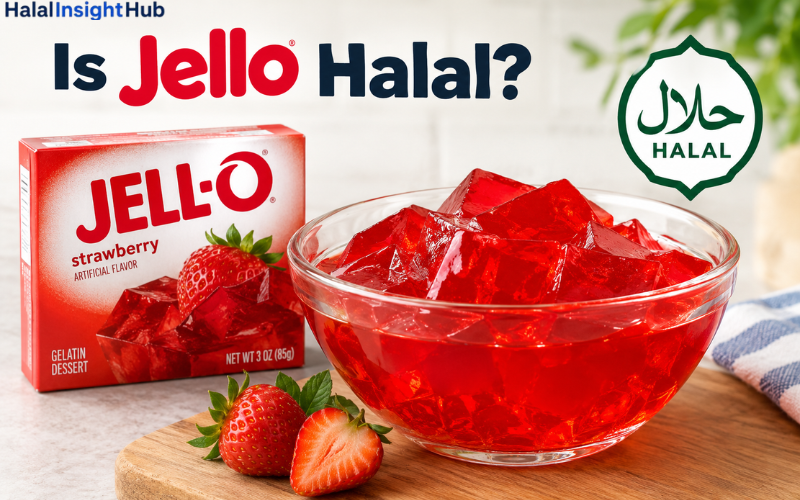
Is Jello halal or haram?No, Jello is not automatically halal. Its halal status mainly depends on the source of the gelatin used to make it. Traditional Jello products commonly contain gelatin, and gelatin can come from pork, beef, or other animal sources.
If the gelatin comes from pork, the product is not halal. If it comes from a halal-certified beef source or another permissible source, the Jello may be halal. Some Jello products may also be made without animal-derived gelatin, but Muslims should check the ingredients and halal certification before eating them.
For Muslims, the safest approach is to look for halal certification or verify the source of the gelatin.
Quick Answer
Is Jello halal? It depends on the gelatin.
Jello made with halal-certified beef gelatin or an approved non-animal alternative can be halal. However, Jello made with pork gelatin is not halal.
Because gelatin is one of the main ingredients responsible for Jello’s familiar texture, checking the gelatin source is more important than simply checking the word “Jello” on the package.
Simple rule:
Halal gelatin = potentially halal Jello
Pork gelatin = not halal
Jello Halal Status at a Glance
| Question | Answer |
| Is Jello halal? | It depends on the ingredients |
| Does Jello contain gelatin? | Many traditional Jello products do |
| Is pork gelatin halal? | No |
| Is halal beef gelatin permissible? | Generally yes |
| Is vegetarian Jello halal? | Usually, if all other ingredients are halal |
| Should Muslims check the label? | Yes |
What Is Jello?
Jello is a popular gelatin-based dessert known for its soft, colorful, and wobbly texture. It is commonly sold as flavored gelatin dessert mixes and is also used in cakes, puddings, candies, marshmallows, and other foods.
The basic ingredients can vary between products, but traditional gelatin desserts commonly contain:
- Gelatin
- Sugar
- Artificial or natural flavors
- Food coloring
- Acids or other food additives
The ingredient that raises the biggest concern for Muslims is gelatin.
This is because gelatin is an animal-derived ingredient in many products, and its halal status depends largely on where it came from and how it was produced.
Why Is Gelatin Important in Jello?
Gelatin gives Jello its characteristic texture.
It is a protein obtained by processing collagen, which is naturally found in animal tissues such as skin, bones, and connective tissue.
Gelatin can come from different animals, including:
- Cows
- Pigs
- Fish
This creates an important halal question: What animal was used to produce the gelatin?
If the gelatin comes from pork, Muslims generally cannot consume the product. If it comes from a halal animal and meets the relevant halal requirements, it may be permissible.
Is Gelatin Halal?
Gelatin itself is not automatically halal or haram.
Its ruling depends on its source and, according to the scholarly position being followed, the production and transformation involved.
For example:
| Gelatin Source | General Halal Consideration |
| Pork gelatin | ❌ Not halal |
| Halal-certified beef gelatin | ✅ Halal |
| Fish gelatin | ✅ Generally halal |
| Plant-based gelling agents | ✅ Generally halal |
| Unknown animal source | ⚠️ Requires verification |
This is why Muslims should not assume that every food containing gelatin is halal.
Is Jello Made With Pork Gelatin?
Some gelatin products are made from pork, and this is one of the main concerns when evaluating conventional gelatin desserts.
If a Jello product contains porcine gelatin, it is not considered halal by Muslims who follow the standard ruling that pork and its derivatives are prohibited.
The easiest way to identify this is to check the ingredient list for terms such as:
- Pork gelatin
- Porcine gelatin
- Gelatin from pork
However, labels do not always provide a detailed animal source. If the package simply says “gelatin,” Muslims who require certainty may need to contact the manufacturer or look for halal certification.
Related Post: Is Mirin Halal or Haram for Muslims?
Is Beef Gelatin Halal?
Beef gelatin can be halal, but not every beef gelatin product is automatically halal.
The cattle must come from a permissible source, and the relevant halal requirements must be satisfied according to the certification standard being followed.
Therefore, the best indication is halal-certified beef gelatin.
If a Jello product specifically states that it contains halal-certified beef gelatin, Muslims can generally consider it permissible.
Is Jello Halal in the USA?
The answer depends on the specific Jello product.
Jello products sold in the United States can contain different ingredients depending on the product and formulation. Muslims should therefore check the current ingredient label instead of assuming that every Jello product has the same gelatin source.
If the product contains gelatin without identifying its source, a Muslim consumer who wants certainty should contact the manufacturer.
Another option is to choose a product carrying a recognized halal certification.
Is Jello Halal in Canada?
Jello products available in Canada should also be checked individually.
Ingredients and formulations can differ between markets, and a product sold in one country may not have exactly the same formulation as a similar product sold elsewhere.
Before purchasing, check:
- The ingredient list
- The gelatin source
- Halal certification
- Manufacturer information
If the gelatin source cannot be confirmed, choosing a clearly halal-certified alternative is the safer option.
Is Jello Halal in the UK?
The same principle applies to Jello products sold in the UK.
A product may be halal if it contains halal-certified gelatin or a suitable plant-based alternative. However, Muslims should not assume that a gelatin dessert is halal simply because it is sold in a country with a large Muslim population.
Always check the individual product.
Is Jello Halal According to Islamic Teachings?
Islam prohibits Muslims from consuming certain foods, including pork and its derivatives.
Allah says in the Quran:
“He has only forbidden to you dead animals, blood, the flesh of swine…”
Quran 2:173
Because pork is specifically prohibited, products made with pork-derived ingredients are generally not permissible for Muslims.
This is why identifying the source of gelatin is so important when determining whether Jello is halal.
Is Jello Haram If It Contains Gelatin?
Not necessarily.
The presence of gelatin alone does not automatically make Jello haram.
The important question is:
Where did the gelatin come from?
If the gelatin is derived from pork, the product is not halal.
If it is halal-certified beef gelatin or fish gelatin, the situation is different.
If the source is unknown, Muslims may choose to avoid the product until they can verify its ingredients.
Are All Jello Products the Same?
No.
One of the biggest mistakes consumers can make is assuming that every Jello product has identical ingredients.
Different products can have different formulations. Even products from the same brand can contain different ingredients.
For example, one product may contain animal-derived gelatin while another may use a different gelling agent.
Therefore, Muslims should evaluate the specific product, not simply the brand name.
How to Check If Jello Is Halal
Here are some simple steps Muslims can follow.
1. Read the Ingredient List
Look for gelatin and identify whether its source is listed.
2. Look for Halal Certification
A recognized halal certification logo provides stronger assurance than simply assuming the product is halal.
3. Check the Manufacturer’s Information
If the label does not identify the gelatin source, contact the manufacturer.
4. Look for Plant-Based Alternatives
Some gelatin-free desserts use ingredients such as agar-agar or pectin.
5. Avoid Unclear Products
If the gelatin source cannot be verified and you want to follow a precautionary approach, choose a clearly halal-certified alternative.
Halal Alternatives to Traditional Jello
Muslims who want to avoid questionable gelatin have several alternatives.
Some desserts use:
- Agar-agar
- Pectin
- Carrageenan
- Halal-certified beef gelatin
- Fish gelatin
Plant-based gelling agents can be particularly useful for people who want a gelatin-free dessert.
However, remember that gelatin-free does not automatically mean halal. Other ingredients should also be checked.
Jello Ingredients Muslims Should Watch
| Ingredient | What Muslims Should Know |
| Gelatin | Check its animal source |
| Pork/Porcine Gelatin | ❌ Not halal |
| Halal Beef Gelatin | ✅ Generally permissible |
| Fish Gelatin | ✅ Generally permissible |
| Agar-Agar | ✅ Plant-based |
| Pectin | ✅ Plant-based |
| Artificial Flavors | Check source when questionable |
Is Jello Pudding Halal?
Jello pudding products need to be evaluated separately from gelatin desserts.
Some pudding products may not rely on gelatin as their primary thickener, while others can contain ingredients that require additional checking.
Therefore, Muslims should read the ingredient list of the exact pudding product they intend to buy.
The same rule applies: do not judge a product solely by the brand name.
Is Jello-O Halal?
If by “Jello-O” you mean a gelatin dessert product, its halal status depends on the specific formulation and gelatin source.
A product containing pork-derived gelatin would not be halal.
A product containing halal-certified beef gelatin or an appropriate plant-based alternative may be halal.
Always check the current packaging because formulations can change.
Can Muslims Eat Jello?
Muslims can eat Jello when its ingredients meet halal requirements.
The safest choices are products that:
- Are halal-certified
- Use halal-certified beef gelatin
- Use fish gelatin
- Use plant-based gelling agents
- Clearly identify permissible ingredients
If a product contains pork gelatin, Muslims should avoid it.
If the source of gelatin is unclear, checking with the manufacturer or choosing a certified alternative is the better option.
“I hope you learned a lot from this article. Check out more articles like this.”
- Is Mirin Halal or Haram for Muslims?
- Is Tuna Halal or Haram for Muslims?
- Is Crab Halal or Haram for Muslims?
- Is Tyson Chicken Halal or Haram for Muslims?
- Is Swedish Fish Halal or Haram for Muslims?
FAQs
Is Jello halal or haram?
Jello can be halal or haram depending on its ingredients. If it contains pork gelatin, it is not halal. If it uses halal-certified gelatin or a permissible alternative, it can be halal.
Does Jello contain pork?
Some gelatin-based products can contain pork-derived gelatin. Check the specific product’s ingredient list and certification.
Is gelatin halal in Islam?
Gelatin is not automatically halal. Its source matters. Halal-certified beef gelatin and fish gelatin are generally considered permissible, while pork gelatin is not.
Is Jello halal for Muslims?
Muslims can eat Jello when the product is made with halal ingredients. Halal certification is the easiest way to verify this.
Is strawberry Jello halal?
The flavor does not determine whether strawberry Jello is halal. Check the gelatin source and other ingredients in the specific product.
Is Jello pudding halal?
It depends on the specific pudding product and its ingredients. Check the package for gelatin and other potentially questionable ingredients.
Is vegetarian Jello halal?
A vegetarian gelatin dessert is generally a better option for Muslims, provided its remaining ingredients are halal.
Can Muslims eat Jello made with beef gelatin?
Yes, if the beef gelatin is halal-certified or otherwise confirmed to meet halal requirements.
Related Post: Is Tuna Halal or Haram for Muslims?
Conclusion
So, is Jello halal? The answer is it depends on the gelatin and other ingredients used in the product.
Traditional gelatin desserts require special attention because gelatin can be derived from pork, beef, fish, or other sources. Pork-derived gelatin is not halal, while halal-certified beef gelatin and many plant-based alternatives can make a product suitable for Muslims.
The best approach is to check the ingredient label and look for reliable halal certification. If the gelatin source is unclear, contacting the manufacturer or choosing a certified halal or gelatin-free alternative can provide greater peace of mind.
Ultimately, Muslims should not assume that every Jello product is halal simply because it is a dessert. Check the ingredients, verify the gelatin source, and choose halal-certified products whenever possible.