
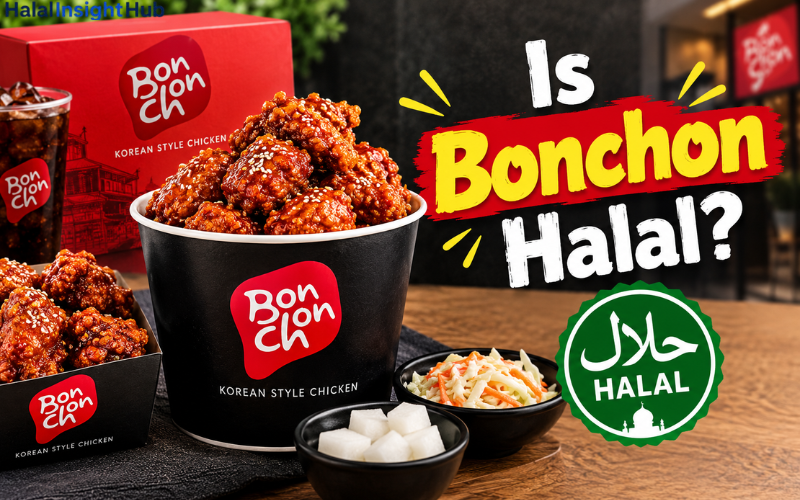
Is Bonchon halal or haram? The answer is not the same for every location or menu item. Bonchon should not automatically be considered halal because its chicken is fried, seasoned, or prepared in a particular way. Muslims need to verify the halal status of the meat, the ingredients used in sauces and marinades, and the restaurant’s food preparation practices.
Bonchon locations may have different suppliers, menus, and operating procedures. Unless a specific restaurant confirms that its chicken and other ingredients meet halal requirements, it is best to avoid assuming that the food is halal.
In this guide, we will explain whether Bonchon is halal, examine its chicken and sauces, discuss possible concerns with its ingredients, and help Muslim customers make informed dining decisions.
Quick Answer: Is Bonchon Halal or Haram?
Bonchon is not universally confirmed as halal, so Muslims should check the halal status of their local restaurant before eating there.
Bonchon is known for Korean-style fried chicken, including soy garlic and spicy flavors. However, the fact that a restaurant serves chicken does not mean that the chicken is halal. The animal must be slaughtered according to Islamic requirements, and the ingredients and preparation methods must also comply with halal guidelines.
Some menu items may contain ingredients that require further investigation, such as cooking wine, alcohol-based flavorings, animal-derived additives, or sauces made with uncertain ingredients. Recipes and suppliers can also vary by location.
Here is the basic verdict:
- Halal? Only when the specific ingredients, meat sourcing, and preparation meet halal requirements.
- Haram? Any item containing prohibited ingredients or non-halal meat would not be permissible.
- Doubtful? If the restaurant cannot confirm the chicken’s halal status or provide sufficient ingredient information, Muslims should exercise caution.
- Best approach: Contact your local Bonchon and ask about halal certification, chicken suppliers, sauces, and shared cooking equipment.
Do not rely on the restaurant’s popularity, the appearance of its food, or assumptions about Korean cuisine to determine whether a meal is halal.
Related Posts: Is Trident gum Halal or Haram for Muslims?
What Is Bonchon?
Bonchon is a restaurant brand known for Korean-inspired fried chicken. Its menu commonly features crispy chicken coated in sauces, along with items such as wings, drumsticks, tenders, fries, rice dishes, and other sides. Exact menu options depend on the country and restaurant location.
The brand’s signature chicken is generally associated with a crisp exterior and flavors such as soy garlic and spicy sauce. These seasonings give the food its distinctive taste, but they also make ingredient verification important for Muslims.
A restaurant meal can have several different halal considerations. The chicken itself must be permissible, the ingredients used in its coating and sauces must be acceptable, and the preparation process must not compromise its halal status.
For example, a chicken wing could be made with halal-certified meat but still require further checking if its sauce contains a prohibited ingredient. Similarly, a sauce might contain only permissible ingredients, while the chicken supplier may not meet halal slaughter requirements.
This is why the halal status of Bonchon cannot be determined from the menu name alone.
Is Bonchon Chicken Halal?
Bonchon’s chicken is the main concern for many Muslim customers. Before ordering, it is important to establish whether the chicken served at the specific location comes from a halal-certified supplier.
For chicken to be halal, it must meet Islamic dietary requirements, including appropriate slaughter. The meat must also be handled in a way that preserves its halal status.
There are three important questions to ask.
1. Is the Chicken Halal-Certified?
Ask whether the restaurant uses chicken certified by a recognized halal certification organization. If it claims to serve halal chicken, request the name of the certifying organization and confirm that the certification applies to the restaurant’s actual meat supply.
A general statement that the chicken is fresh or locally sourced does not establish halal status.
2. Does the Chicken Contain Non-Halal Ingredients?
Chicken marinades, coatings, seasonings, and sauces may include ingredients that require investigation. Depending on the product, concerns can include alcohol-based flavorings, cooking wine, or additives derived from animals.
The presence of an ingredient with an unfamiliar name does not automatically make a product haram. Its source, composition, and use must be assessed.
3. Is the Chicken Prepared Separately?
Even when the chicken is halal-certified, preparation practices matter. Ask whether it is cooked using equipment, oil, and utensils that are free from contamination by non-halal food.
If the restaurant uses shared fryers, ask whether they are also used for non-halal meat or other prohibited ingredients. The answer can help you determine whether the preparation process meets the halal standard you follow.
Important: Without reliable confirmation of the meat source and preparation practices, it is not possible to give a blanket halal verdict for every Bonchon restaurant.
Is Bonchon Halal in the USA?
Muslims in the United States should verify the status of their individual Bonchon location rather than assume that all branches follow the same halal standards.
Restaurant chains may use different suppliers and operating procedures across locations. A halal claim associated with one branch does not automatically establish the status of another.
When contacting a Bonchon restaurant in the USA, ask these questions:
- Is all the chicken halal-certified?
- Which halal certification organization verifies the meat?
- Does the certification cover the current supplier and menu items?
- Are the marinades and sauces free from prohibited ingredients?
- Is the chicken cooked in separate oil or equipment?
- Are any alcoholic ingredients used in cooking or food preparation?
If the restaurant cannot provide clear answers, you should not treat its chicken as confirmed halal.
It is also important to distinguish between a restaurant that offers a few halal items and one whose entire menu is halal. Even if a particular chicken item meets halal requirements, other menu items may not.
Is Bonchon Halal in Other Countries?
Bonchon operates in multiple markets, and its menu and supply arrangements may differ from one country to another. Therefore, the answer may depend on where you plan to eat.
A branch in one country might have different ingredient suppliers, certification arrangements, or menu formulations from a branch elsewhere.
For example, a restaurant in a Muslim-majority market may operate under different food sourcing requirements than a restaurant in the United States. However, the country alone is not proof that a specific meal is halal.
Muslim customers should check the restaurant’s current certification and confirm that it covers the products they intend to order.
The most reliable approach is to verify the actual branch, not rely on online discussions or another customer’s experience at a different location.
Are Bonchon’s Soy Garlic and Spicy Sauces Halal?
Bonchon’s signature sauces are an important part of its menu, but their halal status should not be assumed without ingredient information.
Soy Garlic Sauce
Soy garlic sauce commonly uses ingredients such as soy sauce, garlic, sugar, and seasonings. Depending on the recipe, it may also contain additional flavorings or other ingredients that require verification.
Some soy sauce products are made through fermentation, while others may contain alcohol or have different production methods. The word “soy sauce” alone is not enough to determine whether a specific sauce is halal.
Ask the restaurant for the ingredient information for its current soy garlic sauce and whether the sauce is approved for a halal diet.
Spicy Sauce
Bonchon’s spicy sauce may contain chili ingredients, seasonings, sweeteners, and other flavor components. These ingredients can be permissible, but the complete recipe needs to be checked.
If the sauce contains an alcohol-derived ingredient or an additive with an uncertain source, further clarification may be necessary.
Can Muslims Order Bonchon Without Sauce?
Ordering chicken without sauce does not automatically make it halal. The chicken’s slaughter status, coating ingredients, cooking oil, and preparation equipment still need to be considered.
Removing a sauce can address one potential concern, but it cannot resolve uncertainty about the meat itself.
Bonchon Menu Items and Their Halal Status
The following table summarizes the main considerations for common menu categories. It is a guide to what should be checked, not a claim that Bonchon has confirmed these items as halal.
| Bonchon Menu Item | Main Concern | What to Check |
|---|---|---|
| Fried chicken wings | Chicken sourcing and preparation | Halal certification and fryer practices |
| Chicken drumsticks | Meat and marinade | Supplier, slaughter method, and marinade |
| Chicken tenders | Chicken, coating, and oil | Meat certification and coating ingredients |
| Soy garlic chicken | Chicken and sauce | Halal meat and sauce ingredients |
| Spicy chicken | Chicken and spicy sauce | Meat source and full sauce recipe |
| French fries | Fryer and seasoning | Shared oil and seasoning ingredients |
| Rice dishes | Broth, sauces, and toppings | Ingredient sources and preparation |
| Side dishes | Seasonings and additives | Full ingredient information |
A menu item should only be treated as halal when its relevant ingredients and preparation practices have been verified.
Ingredients in Bonchon Food That Muslims Should Check
When determining whether Bonchon is halal, it helps to focus on the ingredients that can affect a food’s permissibility.
1. Chicken and Other Meat
The source of the chicken is one of the most important factors. Chicken is generally halal as a type of animal, but the meat must also meet Islamic slaughter requirements.
Do not assume that all chicken sold by a commercial restaurant is halal.
2. Cooking Wine and Alcohol
Some Asian-style recipes use cooking wine or other alcohol-containing ingredients. Whether a particular ingredient is present in a Bonchon dish must be established from the actual recipe.
The halal assessment of alcohol-related ingredients can depend on their nature, source, use, and the scholarly standard being followed. If the restaurant confirms that an ingredient is prohibited under the standard you follow, avoid that item.
3. Soy Sauce and Fermented Ingredients
Fermented ingredients are not automatically haram. However, their production method and any added alcohol can be relevant to the assessment.
Ask about the actual sauce used rather than relying on general claims about all soy sauce products.
4. Flavorings and Additives
Flavorings, emulsifiers, and other food additives may come from different sources. Some are plant-derived, while others may be animal-derived or involve processing methods that require further investigation.
An unfamiliar ingredient name does not automatically mean that the food is haram. Reliable ingredient information or halal certification can help resolve the uncertainty.
5. Shared Cooking Oil
Restaurants may use the same fryer for multiple products. If the equipment or oil is shared with non-halal meat or prohibited ingredients, the preparation method needs to be assessed.
Ask the restaurant how it prevents cross-contact and whether separate equipment is used for halal food.
Is Bonchon Halal or Haram? A Simple Comparison
| Situation | Halal Assessment | Reason |
|---|---|---|
| Chicken is verified halal and all other requirements are met | Halal | Meat, ingredients, and preparation meet the relevant requirements |
| Chicken supplier is unknown | Unconfirmed | Halal slaughter has not been established |
| Chicken is confirmed to be non-halal | Not permissible | The meat does not meet halal requirements |
| Sauce contains a confirmed prohibited ingredient | Not permissible for that item | The ingredient affects the food’s permissibility |
| Sauce ingredients are unknown | Requires verification | The complete recipe has not been established |
| Halal chicken is cooked with confirmed non-halal contamination | Requires assessment; avoid if the food is rendered impermissible | Preparation may compromise halal status |
| Restaurant has current, relevant halal certification | Strong evidence of compliance within its scope | Certification provides a basis for verification |
The key difference is between a meal that has been verified as halal and one whose status is simply unknown. These are not the same situation.
How to Check Whether Your Local Bonchon Is Halal
If you want to eat at Bonchon while following a halal diet, use these practical steps before placing your order.
Step 1: Contact the Specific Branch
Ask the manager directly whether the restaurant serves halal-certified chicken. Do not rely solely on a general statement about the brand.
Step 2: Ask for Certification Details
If the restaurant says its chicken is halal, ask which organization certifies it and whether the certification is current. Where possible, verify the certificate and its scope.
Step 3: Check the Sauces and Marinades
Ask whether soy garlic sauce, spicy sauce, marinades, and coatings contain cooking wine, alcohol-based flavorings, or other ingredients that require halal verification.
Step 4: Confirm Cooking Procedures
Find out whether the chicken is cooked in separate oil and whether the restaurant uses dedicated utensils and equipment where needed.
Step 5: Make Your Decision Based on Evidence
If the restaurant provides credible information confirming halal compliance, you can assess the food accordingly. If important details remain unknown, choose a restaurant that offers clearer halal assurance.
What Should Muslims Do If Bonchon Is Not Confirmed Halal?
If your local Bonchon cannot confirm its halal status, you have several options.
You can ask for additional information from the restaurant, look for a verified halal-certified establishment, or choose a meal whose ingredients and preparation are easier to confirm.
Muslims differ in how they approach doubtful foods, and individual circumstances may also matter. If you follow a particular school of Islamic jurisprudence or halal certification standard, consult a qualified scholar or trusted halal authority for guidance on a specific ingredient or preparation method.
The goal is not to label every uncertain food as haram without evidence. It is to avoid treating a food as halal when the essential requirements have not been verified.
“I hope you learned a lot from this article. Check out more articles like this.”
- Is Trident gum Halal or Haram for Muslims?
- Is Shake Shack Halal or Haram for Muslims?
- Are Gushers Halal or Haram for Muslims?
- Is Mcdonald’s Halal or Haram for Muslims?
- Are Jolly Ranchers Halal or Haram for Muslims?
FAQs
1. Is Bonchon halal or haram?
Bonchon cannot be given a universal halal verdict across every location. Its status depends on the chicken supplier, ingredients, certification, and preparation practices at the specific branch.
2. Is Bonchon chicken halal in the USA?
You should check with the individual US location. Ask whether its chicken is halal-certified, which organization verifies it, and whether the certification covers the meat currently being served.
3. Can Muslims eat Bonchon fried chicken?
Muslims can eat it if the chicken, coating, sauces, and preparation methods meet halal requirements. If these details are unconfirmed, do not assume that the chicken is halal.
4. Is Bonchon soy garlic sauce halal?
Its status depends on the actual ingredients and manufacturing or preparation process. Ask the restaurant for ingredient information and check any alcohol-related or animal-derived ingredients.
5. Is Bonchon spicy chicken halal?
Spicy chicken must meet the same requirements as other chicken dishes. The meat must be halal, and the spicy sauce, coating, and cooking process must also be acceptable.
6. Are Bonchon French fries halal?
French fries may contain permissible ingredients, but their status can depend on the oil, seasoning, and fryer practices. Ask whether the fries are cooked separately from non-halal products.
7. Does Bonchon use halal-certified chicken?
Do not assume that all Bonchon locations use halal-certified chicken. Ask the specific branch for current certification details and the name of its meat supplier or certifying organization.
8. Is Bonchon halal in every country?
Not necessarily. Ingredient sourcing, certification, and restaurant procedures may vary by country and location. Verify the branch where you plan to eat.
9. Does ordering Bonchon without sauce make it halal?
No. Removing the sauce does not establish whether the chicken was slaughtered according to halal requirements or whether the coating and cooking process are acceptable.
10. What should I do if Bonchon cannot confirm its halal status?
If the restaurant cannot provide sufficient information, the cautious option is to avoid ordering until the relevant details are verified. You can also choose a restaurant with reliable halal certification.
Related Posts: Is Trident gum Halal or Haram for Muslims?
Conclusion
So, is Bonchon halal? The answer depends on the specific location, its chicken supply, the ingredients in its sauces, and its food preparation practices. Bonchon should not be considered universally halal without reliable confirmation.
For Muslim consumers, the most important checks are halal certification for the chicken, ingredient information for sauces and marinades, and suitable cooking procedures. A dish that appears simple or contains chicken is not automatically halal.
Before visiting Bonchon, contact your local branch and ask clear questions about its meat, ingredients, and preparation methods. If the restaurant provides reliable evidence that the food meets your halal requirements, you can make an informed decision. If the information remains uncertain, choosing a verified halal alternative is the safer approach.

Pingback: Is Hi-Chew Halal or Haram for Muslims? -