
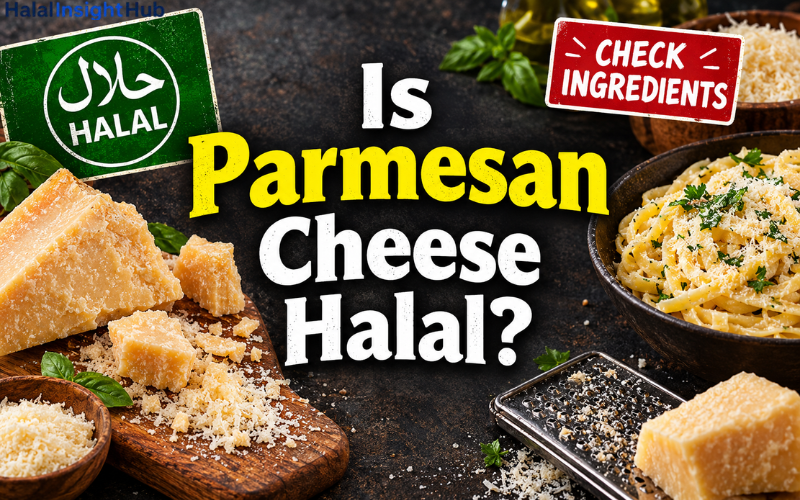
Is Parmesan cheese halal or haram? Yes, Parmesan cheese can be halal, but not every type is suitable for Muslims. Its halal status mainly depends on the source of rennet, an enzyme used to turn milk into cheese. Parmesan made with microbial rennet, plant-based rennet, or verified halal animal rennet can be halal if the other ingredients and production process also meet Islamic dietary requirements.
Traditional Parmigiano Reggiano, an authentic Italian Parmesan cheese, is made using milk, salt, and calf rennet. Because the source and halal status of the rennet matter, Muslims should check the product’s ingredients and certification before eating it.
If you want to enjoy Parmesan cheese while following a halal diet, understanding its ingredients is the best way to make an informed decision.
Quick Answer
Yes, Parmesan cheese can be halal, but it depends on the type of rennet used to make it.
Parmesan made with microbial or plant-based rennet is generally considered halal when all other ingredients and manufacturing processes are permissible. Cheese made with verified halal animal rennet can also be halal. However, Parmesan containing pork-derived rennet is haram, and products made with animal rennet of unknown origin may require further investigation.
Before buying Parmesan cheese, check the halal certification, read the ingredient label, and contact the manufacturer if the rennet source is unclear.
What Is Parmesan Cheese?
Parmesan cheese is a hard, aged cheese known for its rich, savory flavor and slightly nutty taste. It is widely used in Italian dishes and is commonly sprinkled over pasta, pizza, salads, soups, and other meals.
Authentic Parmigiano Reggiano comes from specific regions of Italy and follows traditional production standards. Other products sold as Parmesan or Parmesan-style cheese may use different ingredients and manufacturing methods.
Parmesan is usually made from milk, salt, and rennet. Milk and salt are generally halal, but rennet requires additional attention because it may come from animal, microbial, or plant sources.
Popular uses of Parmesan cheese include:
- Pasta and spaghetti
- Pizza toppings
- Caesar salads
- Creamy sauces
- Soups and risotto
- Baked vegetables
Because Parmesan is commonly used in everyday meals, Muslim consumers should understand how to identify a halal product before adding it to their food.
Related Posts: Is NAYA Halal or Haram for Muslims?
Is Parmesan Cheese Halal or Haram?
Parmesan cheese is not automatically halal or haram. Its status depends on the ingredients, particularly the rennet, and the religious requirements followed by the consumer.
| Type of Parmesan Cheese | Halal Status | Reason |
| Parmesan made with microbial rennet | Generally halal | The enzyme is produced using microorganisms |
| Parmesan made with plant-based rennet | Generally halal | The enzyme comes from plants |
| Parmesan made with verified halal animal rennet | Halal if all requirements are met | The animal-derived ingredient meets applicable halal standards |
| Parmesan made with animal rennet of unknown origin | Requires verification | The source may not meet the requirements followed |
| Parmesan made with pork-derived rennet | Haram | Pork-derived ingredients are prohibited |
This table provides general guidance. A product’s actual status should be established through reliable ingredient information, certification, and the relevant Islamic ruling.
Why Does Rennet Matter in Parmesan Cheese?
Rennet is an enzyme used in cheese production to separate milk into solid curds and liquid whey. The curds are processed and aged to produce different types of cheese, including Parmesan.
The important point for Muslims is that rennet does not always come from the same source. Some manufacturers use enzymes extracted from animals, while others use microbial or plant-based alternatives.
Animal Rennet
Animal rennet is traditionally obtained from the stomach lining of young animals, including calves.
Its halal status depends on the source and the interpretation of Islamic dietary rules being followed. Some scholars accept certain forms of animal-derived rennet under particular conditions, while others apply stricter requirements.
For this reason, Parmesan made with animal rennet should not automatically be considered halal without understanding its source and the applicable religious ruling.
Microbial Rennet
Microbial rennet is produced using microorganisms rather than being extracted directly from an animal’s stomach.
It is generally considered suitable for halal diets, provided the production process and other ingredients meet halal requirements.
For Muslims who want to avoid uncertainty surrounding animal-derived enzymes, Parmesan made with verified microbial rennet can be a practical option.
Plant-Based Rennet
Plant-based rennet comes from certain plants that contain milk-coagulating enzymes.
This type of rennet is generally halal, provided the remaining ingredients and manufacturing process are also permissible.
When shopping, look for terms such as microbial enzymes, vegetarian rennet, or plant-based rennet. If the label does not clearly identify the source, contact the manufacturer.
Is Traditional Parmigiano Reggiano Halal?
Traditional Parmigiano Reggiano is an authentic Italian cheese made according to strict production standards. Its traditional ingredients include milk, salt, and calf rennet.
The use of calf rennet means that Muslims need to consider the source of the enzyme before deciding whether a particular product meets their halal requirements.
Some scholars have different views on animal-derived rennet, so there is not one universally accepted answer that applies to every Muslim consumer and every religious interpretation.
If you want to buy authentic Parmigiano Reggiano, check whether the specific product has reliable halal certification. You can also contact the manufacturer or consult a trusted Islamic scholar about the rennet source and the ruling you follow.
Do not assume that traditional production, an Italian origin, or a short ingredient list automatically confirms halal status.
Is Parmesan Cheese Halal in the USA?
Parmesan cheese sold in the United States can be halal, but its status depends on the individual product and its ingredients.
Some products may use microbial or vegetarian rennet, while others may use animal-derived enzymes. Ingredient formulations and certification can vary between manufacturers.
Before purchasing Parmesan in the USA, check the packaging for halal certification and review the ingredient list carefully.
If the label lists only “enzymes” or “rennet,” contact the manufacturer to ask about the source. If you require verified halal compliance, choose a product with reliable certification that applies to the exact item.
Is Parmesan Cheese Halal in the UK?
Parmesan cheese in the United Kingdom may be halal or require further verification, depending on the product.
Some cheese varieties use microbial or vegetarian rennet, while traditional varieties may use animal-derived rennet. The product name alone does not tell you whether the enzyme source meets your halal requirements.
Muslim consumers should look for recognized halal certification and check the ingredients before buying. When information is incomplete, contacting the manufacturer is a useful next step.
Is Parmesan Cheese Halal in Canada?
The halal status of Parmesan cheese in Canada also depends on the brand, ingredients, and production method.
Imported Italian cheese and locally produced Parmesan-style products may have different rennet sources and certification arrangements. Therefore, consumers should not assume that all products sold in the same supermarket have the same halal status.
Check the label, look for a reliable halal certificate, and ask the manufacturer for clarification when necessary.
Which Ingredients Should Muslims Check in Parmesan Cheese?
The ingredient list is one of the easiest ways to begin checking whether Parmesan cheese is halal.
| Ingredient | General Halal Guidance | What to Know |
| Milk | Generally halal | Check for any additional ingredients |
| Salt | Halal | Ordinary food-grade salt is permissible |
| Microbial rennet | Generally halal | The production process must meet halal requirements |
| Plant-based rennet | Generally halal | Check the rest of the ingredients |
| Animal rennet | Depends on the source and ruling | Verify its halal status |
| Unspecified enzymes | Requires further information | Ask the manufacturer about the source |
An ingredient list may not always disclose every detail needed to determine halal status. When the source of an enzyme is unclear, manufacturer confirmation or reliable certification can help.
Is Kraft Parmesan Cheese Halal?
Kraft Parmesan products should be checked individually because ingredients and formulations can vary between products and markets.
Do not assume that a well-known cheese brand is automatically halal. Read the ingredient label and look for reliable halal certification.
If the product does not clearly identify the rennet or enzyme source, contact the manufacturer for clarification. If you cannot verify the information and prefer to avoid uncertainty, choose a Parmesan product with confirmed halal certification.
Is Grated Parmesan Cheese Halal?
Grated Parmesan cheese can be halal if its ingredients and production process meet Islamic dietary requirements.
The fact that the cheese is grated rather than sold in a block does not automatically change its halal status. However, packaged grated cheese may contain additional ingredients, so it is important to read the full ingredient list.
Check the rennet source, look for halal certification, and confirm any unclear ingredients before purchasing.
The same advice applies to shredded Parmesan blends, powdered cheese toppings, and Parmesan used in ready-made sauces.
How to Identify Halal Parmesan Cheese
Follow these steps to make a more informed choice when shopping for Parmesan cheese.
1. Look for Halal Certification
Check whether the package displays a halal logo from a reliable certification organization. Make sure the certification applies to the specific product you are buying.
2. Read the Ingredient Label
Look for rennet, animal enzymes, microbial enzymes, or vegetarian rennet. If the label does not explain the source, you may need additional information.
3. Contact the Manufacturer
Ask whether the product uses animal, microbial, or plant-based rennet. If the rennet is animal-derived, ask whether it meets the requirements of the relevant halal certification authority.
4. Check the Exact Product
Do not rely solely on a brand name. Different varieties from the same manufacturer may use different ingredients or be sold under different certification arrangements.
5. Consult a Trusted Scholar if Necessary
If the product contains animal-derived rennet and you are unsure about the ruling, consult a qualified scholar who understands the Islamic dietary standards you follow.
What Parmesan Cheese Should Muslims Choose?
Muslims who want to avoid uncertainty can prioritize products with clear ingredient information and reliable halal certification.
Consider these options:
- Halal-certified Parmesan: A practical choice when the certification is valid and applies to the product.
- Microbial-rennet Parmesan: Generally suitable when all other ingredients and processes meet halal requirements.
- Plant-based-rennet Parmesan: Generally suitable if the complete product is halal-compliant.
- Verified halal animal-rennet Parmesan: Suitable when the ingredient meets the halal requirements you follow.
- Parmesan with unclear enzyme sources: Seek confirmation before deciding if you require certainty.
Remember that vegetarian labeling is not identical to halal certification. It can provide useful information about rennet, but it does not automatically establish that every ingredient and production step meets halal requirements.
“I hope you learned a lot from this article. Check out more articles like this.”
- Is NAYA Halal or Haram for Muslims?
- Is Sugar Alchohol Halal or Haram for Muslims?
- Is Kosher Halal or Haram for Muslims?
- Is Turkey Bacon Halal or Haram for Muslims?
- Is Vanilla extract Halal or Haram for Muslims?
FAQs
Is Parmesan cheese halal or haram?
Parmesan cheese can be halal or haram depending on the rennet source, other ingredients, and manufacturing process. Products made with suitable microbial or plant-based rennet are generally halal when all other requirements are met.
Why is Parmesan cheese sometimes not halal?
Some traditional Parmesan varieties use animal-derived calf rennet. If the rennet does not meet the halal requirements followed by the consumer, the cheese may not be considered halal under that interpretation.
Is authentic Parmigiano Reggiano halal?
Traditional Parmigiano Reggiano uses calf rennet, so its halal status requires consideration of the rennet source and the applicable Islamic ruling. Check for reliable certification or consult a trusted scholar.
Is Parmesan cheese made with microbial rennet halal?
Generally, yes. Microbial rennet is produced using microorganisms rather than being extracted directly from an animal. The rest of the ingredients and production process must also meet halal requirements.
Is vegetarian Parmesan cheese halal?
Parmesan made with vegetarian rennet is generally suitable for halal diets if the other ingredients and manufacturing process are permissible. Vegetarian labeling alone does not guarantee halal certification.
Is Kraft Parmesan cheese halal?
The status depends on the exact product and its ingredients. Check for halal certification and contact the manufacturer if the rennet or enzyme source is unclear.
Is grated Parmesan cheese halal?
Grated Parmesan can be halal if its ingredients and manufacturing process meet halal requirements. Check the full ingredient list and certification rather than relying on the product name alone.
Can Muslims eat Parmesan cheese without halal certification?
The answer may depend on the ingredients and the Islamic ruling a person follows. If the rennet source is unclear, seek additional information from the manufacturer or a trusted scholar.
Related Posts: Is NAYA Halal or Haram for Muslims?
Conclusion
Parmesan cheese can be halal, but not every Parmesan product is automatically suitable for Muslims. The main ingredient to consider is rennet, especially in traditional Parmesan made with calf rennet.
Products made with suitable microbial or plant-based rennet are generally halal when all other ingredients and manufacturing requirements are met. Parmesan made with animal-derived rennet may require further verification, depending on the source and the Islamic ruling you follow.
Before buying Parmesan, read the ingredient label, check for reliable halal certification, and contact the manufacturer if the rennet source is unclear. This is particularly important when buying traditional Parmigiano Reggiano, grated Parmesan, or products from familiar brands.
If you want greater confidence, choose Parmesan with valid halal certification or a verified halal-compatible rennet source. By checking these details, you can make informed food choices that align with your Islamic dietary requirements.

Pingback: Is Five Guys Halal or Haram for Muslims? -
Pingback: Is Twizzlers Halal or Haram for Muslims? -
Pingback: Are Takis Halal or Haram for Muslims? -
Pingback: Are Jolly Ranchers Halal or Haram for Muslims? -
Pingback: Is Mcdonald’s Halal or Haram for Muslims? -
Pingback: Are Gushers Halal or Haram for Muslims? -
Pingback: Is Shake Shack Halal or Haram for Muslims? -