
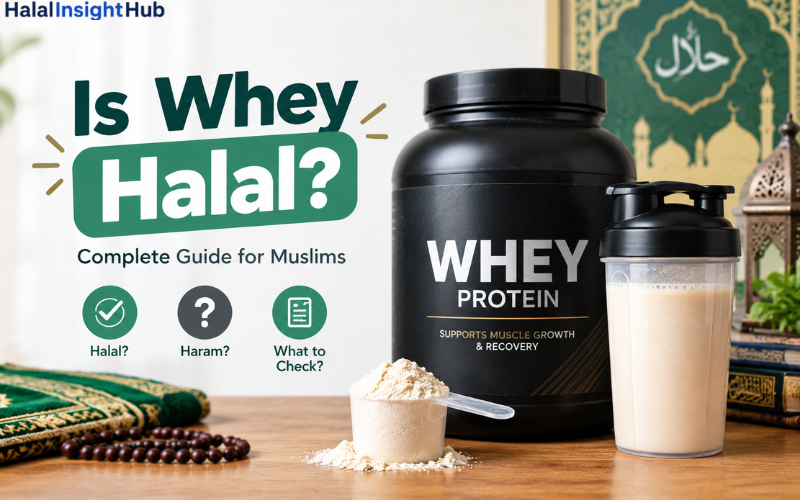
Is whey halal or haram? Yes, whey is generally halal, but not every whey protein product is automatically halal. Whey itself is a dairy ingredient made during the production of cheese, but its halal status can depend on how the cheese is produced and which enzymes or additives are used.
For Muslims, the main concern is usually rennet, an enzyme traditionally used to separate milk during cheesemaking. If the rennet comes from a halal-slaughtered animal or is microbial or vegetarian, the whey is generally acceptable. Other ingredients, such as flavors, emulsifiers, sweeteners, and additives, should also be checked.
Therefore, the safest choice is a whey protein product with a reliable halal certification or clearly halal ingredients.
Quick Answer
Yes, whey can be halal, but you should check the source and ingredients before buying it.
Plain whey is a dairy product and is not inherently haram. However, the cheesemaking process used to produce whey may involve animal-derived rennet, which is where the main halal concern arises.
If your whey protein has a recognized halal certification, you can generally consume it with confidence. If there is no certification, check the ingredient list for rennet, enzymes, gelatin, alcohol-based flavors, and other questionable ingredients.
Whey Halal Status at a Glance
| Question | Answer |
| Is whey halal? | ✅ Generally yes |
| Is whey protein always halal? | ⚠️ No, it depends on ingredients and processing |
| Is whey made from milk? | ✅ Yes |
| Can whey contain animal enzymes? | ⚠️ Some products may |
| Is halal-certified whey safe to choose? | ✅ Generally yes |
| Can Muslims drink whey protein? | ✅ Yes, if the product meets halal requirements |
What Is Whey?
Whey is a liquid that remains after milk is separated during the cheesemaking process. It contains water, lactose, minerals, and high-quality milk proteins.
Whey protein is then processed from this liquid to create concentrated protein products commonly used in protein shakes, sports nutrition, and meal supplements.
The three common forms of whey protein are:
- Whey Protein Concentrate (WPC)
- Whey Protein Isolate (WPI)
- Hydrolyzed Whey Protein
All three can be halal. The name of the whey protein does not determine whether it is halal or haram. Instead, Muslims need to consider the ingredients and manufacturing process.
How Is Whey Protein Made?
Understanding how whey is produced makes its halal status easier to understand.
Milk is first used to make cheese. During this process, enzymes are added to help separate the milk into curds and liquid whey.
The curds are used to make cheese, while the liquid portion becomes whey.
The whey can then be filtered and processed to remove some of its lactose, fat, and other components. Depending on the product, additional ingredients may be added before the whey protein is packaged.
This means the halal question is not simply about milk. It also involves the ingredients and enzymes used during processing.
Why Is Rennet Important for Whey?
Rennet is one of the most important ingredients to consider when determining the halal status of whey.
Traditionally, rennet can be obtained from the stomach lining of young animals, particularly calves. Because this is an animal-derived ingredient, its Islamic status depends on the source and how the animal was slaughtered.
Rennet can also come from other sources, including:
- Microbial sources
- Fermentation-based production
- Plant sources
- Animal sources
For Muslims, whey made using halal-compliant rennet is generally not a concern. However, whey made using questionable animal-derived ingredients may require further investigation.
Is Whey Protein Halal?
Whey protein can be halal, but the product must be evaluated as a whole.
A whey protein powder may contain much more than whey. Manufacturers commonly add ingredients to improve taste, texture, shelf life, and nutritional value.
For example, a protein powder may contain:
- Whey protein concentrate
- Whey protein isolate
- Cocoa
- Flavoring
- Sweeteners
- Lecithin
- Enzymes
- Vitamins
- Minerals
- Thickeners
Most of these ingredients are not inherently problematic. However, certain additives can have animal-derived or alcohol-related sources.
This is why checking the entire ingredient list is important.
Is Whey Protein Concentrate Halal?
Yes, whey protein concentrate can be halal.
Whey protein concentrate is produced by filtering whey to increase its protein content while retaining varying amounts of lactose and other milk components.
The protein itself comes from milk, but the halal status can still depend on the original cheesemaking process and any additional ingredients.
If the product is halal-certified, whey protein concentrate is generally suitable for Muslims.
Is Whey Protein Isolate Halal?
Yes, whey protein isolate can also be halal.
Whey protein isolate undergoes additional processing to remove much of the lactose and fat, resulting in a higher protein concentration.
The additional filtration does not make whey haram. However, the same principle applies: Muslims should check the source of the whey and the other ingredients used in the finished product.
Whey Protein Types and Halal Status
| Whey Type | Generally Halal? | What to Check |
| Whey Concentrate | ✅ Yes | Rennet and additives |
| Whey Isolate | ✅ Yes | Processing and ingredients |
| Hydrolyzed Whey | ✅ Usually | Enzymes and additives |
| Unflavored Whey | ✅ Usually | Source and processing |
| Flavored Whey | ⚠️ Check | Flavorings and additives |
Is Whey From Cheese Halal?
Whey obtained during cheesemaking can be halal, but the type of rennet used to make the cheese may matter.
If the cheese is made using microbial, vegetarian, or halal-compliant rennet, the resulting whey is generally not problematic.
However, if the source of the rennet is unclear, Muslims who follow a stricter approach may want to investigate further or choose a halal-certified whey product.
This is particularly important when buying whey protein made from cheese produced by large manufacturers, because the packaging may not always provide detailed information about the cheesemaking process.
Related Post: Is Rice Wine Halal or Haram for Muslims?
Is Whey Protein Haram Because It Comes From Cheese?
No. Whey is not haram simply because it comes from cheese.
The concern comes from the ingredients and processing methods used to produce the cheese and whey.
Cheese itself can be halal or questionable depending on ingredients such as rennet. Therefore, whey derived from cheesemaking should be assessed based on its production process rather than being automatically classified as haram.
A common misconception is that anything derived from cheese must be haram if animal rennet was involved. Islamic rulings on rennet involve scholarly discussions and differences, so Muslims should follow the guidance of a trusted qualified scholar when a specific product raises concerns.
What Ingredients Should Muslims Check in Whey Protein?
When buying whey protein, do not only look for the word “whey.”
Check the complete ingredient list.
Some ingredients deserve additional attention:
Rennet or Enzymes
If the product or its source mentions animal-derived enzymes, investigate their origin.
Gelatin
Gelatin can be derived from pork or non-halal-slaughtered animals. If gelatin is listed, look for a halal certification or a clearly halal source.
Flavorings
Most flavorings are permissible, but some formulations may contain alcohol or other questionable carriers.
Emulsifiers
Ingredients such as lecithin are commonly used in protein powders. Their source should be checked if the manufacturer indicates an animal-derived origin.
Vitamins and Minerals
Most are acceptable, but certain vitamin capsules or coatings can contain gelatin.
How to Know If Whey Protein Is Halal
The easiest way to choose whey protein is to look for reliable halal certification.
A halal certification generally provides more confidence than trying to investigate every individual ingredient yourself.
When shopping, look for:
- A recognized halal certification logo
- Clear ingredient information
- Manufacturer transparency
- No pork-derived ingredients
- Halal-compliant enzymes or rennet
- Clear information about processing
If a product has no certification, that does not automatically mean it is haram. It simply means you may need to investigate its ingredients and manufacturing process more carefully.
How to Check a Whey Protein Label
| Label Information | What Muslims Should Consider |
| Whey Protein | Generally halal |
| Milk | Halal |
| Rennet | Check source |
| Enzymes | Check source when animal-derived |
| Gelatin | Verify halal source |
| Natural Flavors | Check if source is unclear |
| Lecithin | Usually acceptable, verify source if necessary |
| Halal Certification | Strong indicator of compliance |
Is Flavored Whey Halal?
Flavored whey can be halal, but flavoring makes the ingredient list more complicated.
Popular flavors such as chocolate, vanilla, strawberry, and cookies and cream may contain several additional ingredients.
For example, a flavored whey powder could contain:
- Cocoa
- Natural or artificial flavor
- Sweeteners
- Color additives
- Emulsifiers
- Thickeners
Most of these ingredients can be halal, but the final product should still be checked.
If you want the simplest option, plain or halal-certified whey protein can make the decision easier.
Is Whey Protein With Creatine Halal?
Whey protein combined with creatine can be halal.
Creatine itself is not automatically haram. However, the complete product still needs to be checked for other ingredients.
If a protein powder contains whey, creatine, flavoring, sweeteners, and other additives, all of these components should meet halal requirements.
A halal-certified product is generally the easiest choice.
Is Whey Protein Safe for Muslims?
From a halal perspective, whey protein can be consumed by Muslims when its ingredients and manufacturing process meet halal requirements.
However, halal status and health suitability are two different questions.
Someone may have allergies, lactose intolerance, dietary restrictions, or other reasons to avoid certain protein powders. Therefore, halal certification does not automatically mean that a product is suitable for every person.
Can Muslims Drink Whey Protein Every Day?
Yes, Muslims can consume halal whey protein as part of their diet.
Whey protein is simply a concentrated source of milk protein. Whether someone needs it every day depends on their overall diet and nutritional needs.
The important point from an Islamic perspective is that the product itself should contain halal ingredients and be manufactured in a halal-compliant manner.
Moderation is also an important principle when consuming any food or supplement.
What Is the Best Whey Protein for Muslims?
For Muslims looking for whey protein, the easiest option is a product with recognized halal certification.
When comparing products, consider:
- Halal certification
- Ingredient transparency
- Source of rennet and enzymes
- Absence of pork-derived ingredients
- Manufacturer information
- Your own dietary requirements
A product being expensive or marketed as “premium” does not automatically make it halal. Certification and ingredient transparency are much more useful indicators.
Is Whey Halal or Haram?
| Product | General Status |
| Plain whey | ✅ Halal |
| Halal-certified whey protein | ✅ Halal |
| Whey concentrate | ✅ Generally halal |
| Whey isolate | ✅ Generally halal |
| Whey with unknown animal enzymes | ⚠️ Check carefully |
| Whey with pork gelatin | ❌ Not halal |
| Whey with questionable ingredients | ⚠️ Verify before consuming |
“I hope you learned a lot from this article. Check out more articles like this.”
- Is Glycerin Halal or Haram for Muslims?
- Is Rice Wine Halal or Haram for Muslims?
- Is Tyson Chicken Halal or Haram for Muslims?
- Is Swedish Fish Halal or Haram for Muslims?
- Is Jollibee Halal or Haram for Muslims?
FAQs
Is whey halal in Islam?
Yes, whey is generally halal because it comes from milk. However, the cheesemaking process, rennet, enzymes, and other ingredients can affect the halal status of a whey product.
Is whey protein halal or haram?
Whey protein is generally halal, but not every product is automatically halal. Check the ingredients, processing methods, and halal certification before buying.
Does whey protein contain pork?
Pure whey protein does not naturally come from pork. However, some finished protein powders may contain additives such as gelatin or flavoring ingredients that require verification.
Is whey protein halal for Muslims?
Yes, Muslims can consume halal-compliant whey protein. Choosing a product with reliable halal certification is the simplest way to avoid uncertainty.
Is whey protein isolate halal?
Yes, whey protein isolate is generally halal. The main considerations are the source of the original whey and any additional ingredients in the product.
Is whey protein concentrate halal?
Yes, whey protein concentrate can be halal. Check the source of rennet and other ingredients used during production.
Is rennet in whey protein halal?
It depends on the source of the rennet and the applicable Islamic ruling. Microbial and vegetarian rennet generally avoid the concern associated with animal-derived rennet, while animal rennet requires consideration of its source and slaughter status.
Is flavored whey protein halal?
It can be. However, flavored whey may contain additional ingredients that should be checked. Look for halal certification or verify questionable ingredients.
Can I drink whey protein without halal certification?
A lack of halal certification does not automatically make whey protein haram. However, if the ingredients or manufacturing process are unclear, Muslims who want to avoid doubtful products may choose a certified alternative.
Related Post: Is Glycerin Halal or Haram for Muslims?
Conclusion
So, is whey halal? In general, yes. Whey comes from milk and is not inherently haram. However, the halal status of a whey protein product can depend on how the whey was produced and what additional ingredients were added.
The main issue to investigate is often rennet or enzymes used during cheesemaking, particularly when they are derived from animals. Other ingredients such as gelatin, flavorings, and certain additives may also require verification.
For Muslims who want the simplest and most reliable option, choosing a halal-certified whey protein is recommended. If certification is unavailable, carefully check the ingredient list and contact the manufacturer when the source of an ingredient is unclear.
Ultimately, whey itself should not be automatically considered haram. The correct approach is to look at the complete product, its ingredients, and its manufacturing process before making a halal decision.


Pingback: Is Olive Garden Halal or Haram for Muslims? -